14 hr
Luxor Day Trip from Hurghada with Tutankhamun Tomb
- Expert local guide
- Small group
- Skip-the-line access
- Free cancellation
Hurghada to Luxor Private Day Trip — Valley of the Kings & Karnak
Cross the desert in private comfort, stand where pharaohs ruled.
Compare fares, pick the fit — all bookings are mobile-voucher and eligible for free cancellation where shown.
14 hr
24 hr
24 hr
| Experience | From | Duration | Rating | Transfers | Skip-the-line | Guide | Price | |
|---|---|---|---|---|---|---|---|---|
|
Guided Experience
Most popular
Luxor Day Trip from Hurghada with Tutankhamun Tomb
|
Hurghada | 14 hr | ★ 4.8 | ✓ | ✓ | ✓ | €74 | Book → |
|
Guided Experience
Luxor Day Trip: Valley of the Kings & Karnak Temple from Hurghada
|
Hurghada | 24 hr | ★ 4.9 | ✓ | ✓ | ✓ | €82 | Book → |
|
Guided Experience
Luxor Valley of the Kings & Tutankhamun Tomb Day Trip from Hurghada
|
Hurghada | 24 hr | ★ 5.0 | ✓ | ✓ | ✓ | €68 | Book → |
Worth it for history-focused travelers with budget flexibility
A hurghada to luxor private day trip commands premium pricing—typically starting around 3,500–4,500 EGP per person for private vehicle transfers, Egyptologist guide, and site admissions—but delivers access to Egypt's richest archaeological concentration in a single day. You cover roughly 280 km each way (four hours of driving total), leaving six hours on-site to walk through Karnak Temple's hypostyle hall, descend into royal tombs in the Valley of the Kings, and stand before Tutankhamun's actual burial chamber. The private format means no group wait times, flexible photo stops, and departure schedules that suit your Red Sea hotel checkout. For travelers who cannot extend their Egypt itinerary to stay overnight in Luxor, the hurghada to luxor private day trip tours justify the cost by condensing what would otherwise require a separate flight and hotel into one intensive excursion. Solo travelers face steep per-person rates; groups of four or more see better per-head value.
Bottom line: If your Red Sea schedule cannot accommodate an overnight Luxor stay, the private day trip remains the most time-efficient way to see pharaonic Egypt's crown jewels.
Hand-picked experiences loved by thousands of travelers
15 hours
Free Cancellation
Journey through millennia of pharaonic history at Karnak, Valley of the Kings, and Hatshepsut Temple
15 hours
Free Cancellation
Journey through millennia of pharaonic history with expert-guided visits to Luxor's iconic monuments
1 day
Free Cancellation
Journey through ancient Egypt's archaeological treasures on a guided day tour from Hurghada to Luxor
4 hours
Free Cancellation
Direct private car service linking Hurghada and Luxor with professional driver and luggage assistance
14 hours
Free Cancellation
Discover ancient Egypt's treasures on a customizable full-day excursion to Luxor's iconic temples and tombs
18 hours
Free Cancellation
Float above ancient temples at sunrise, then explore royal tombs, sail the Nile, and discover pharaonic wonders
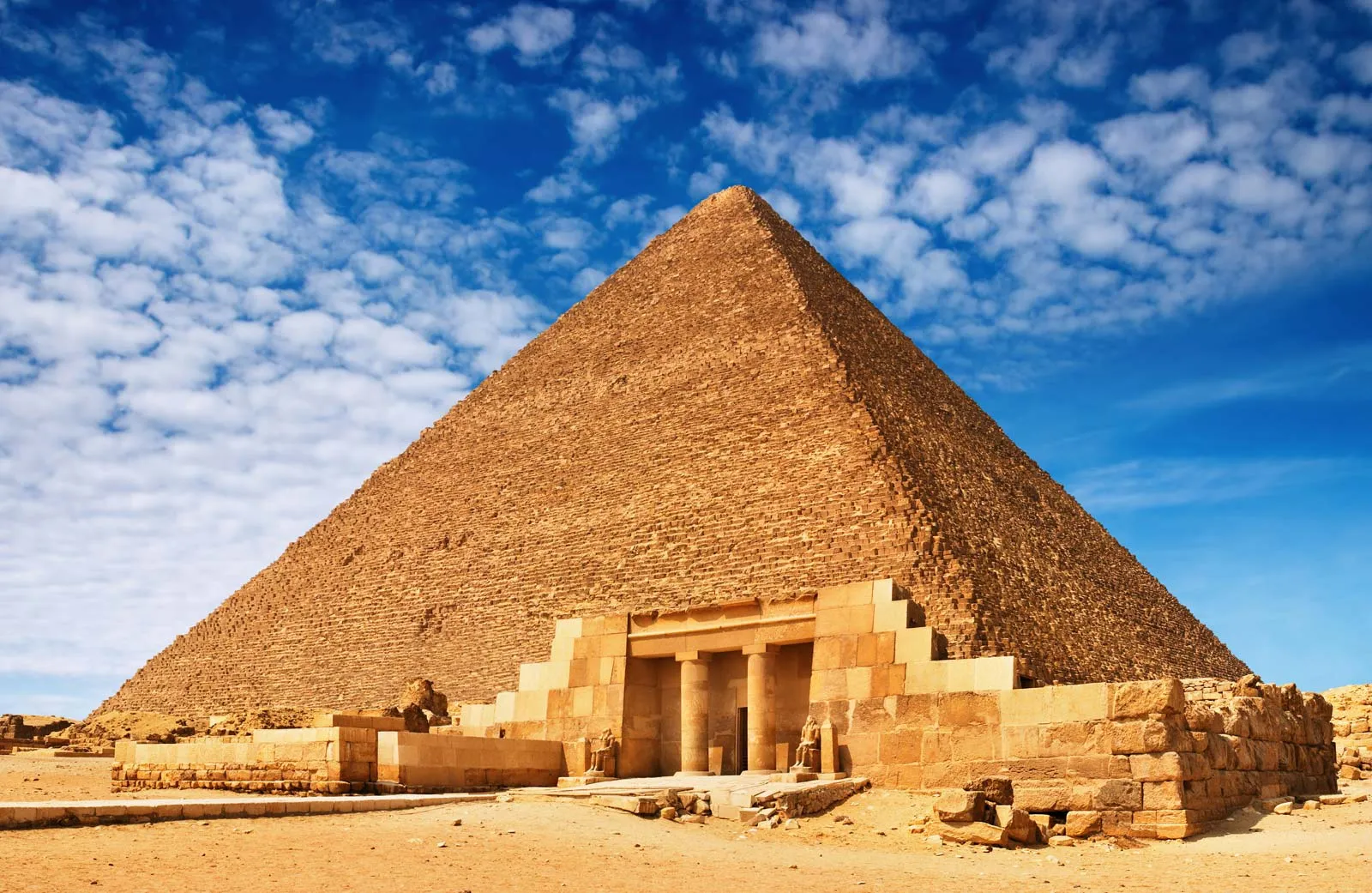
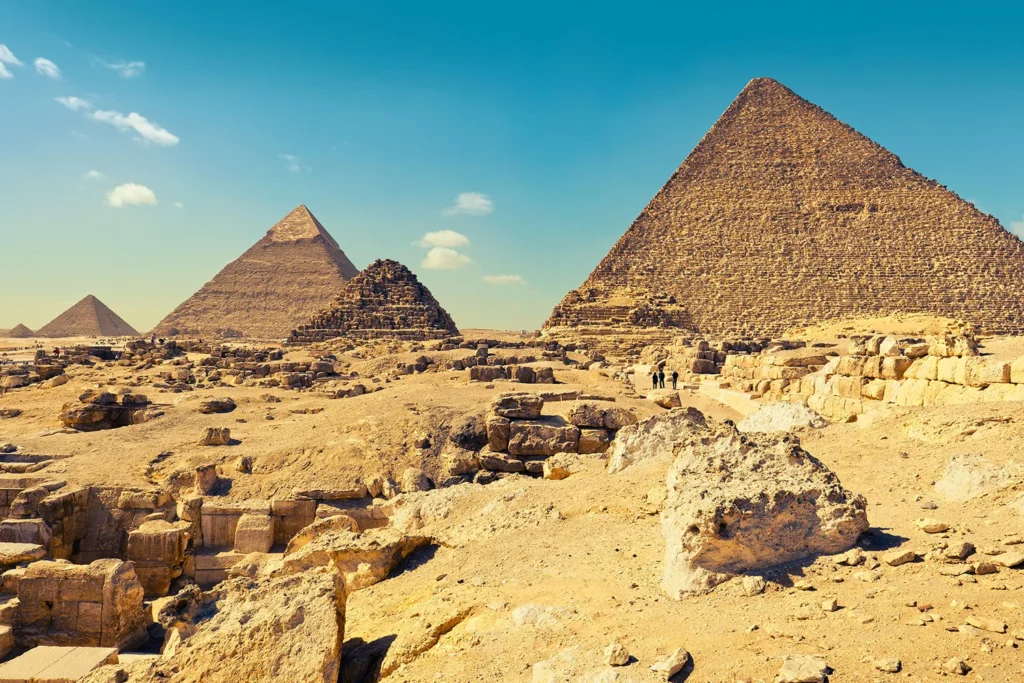
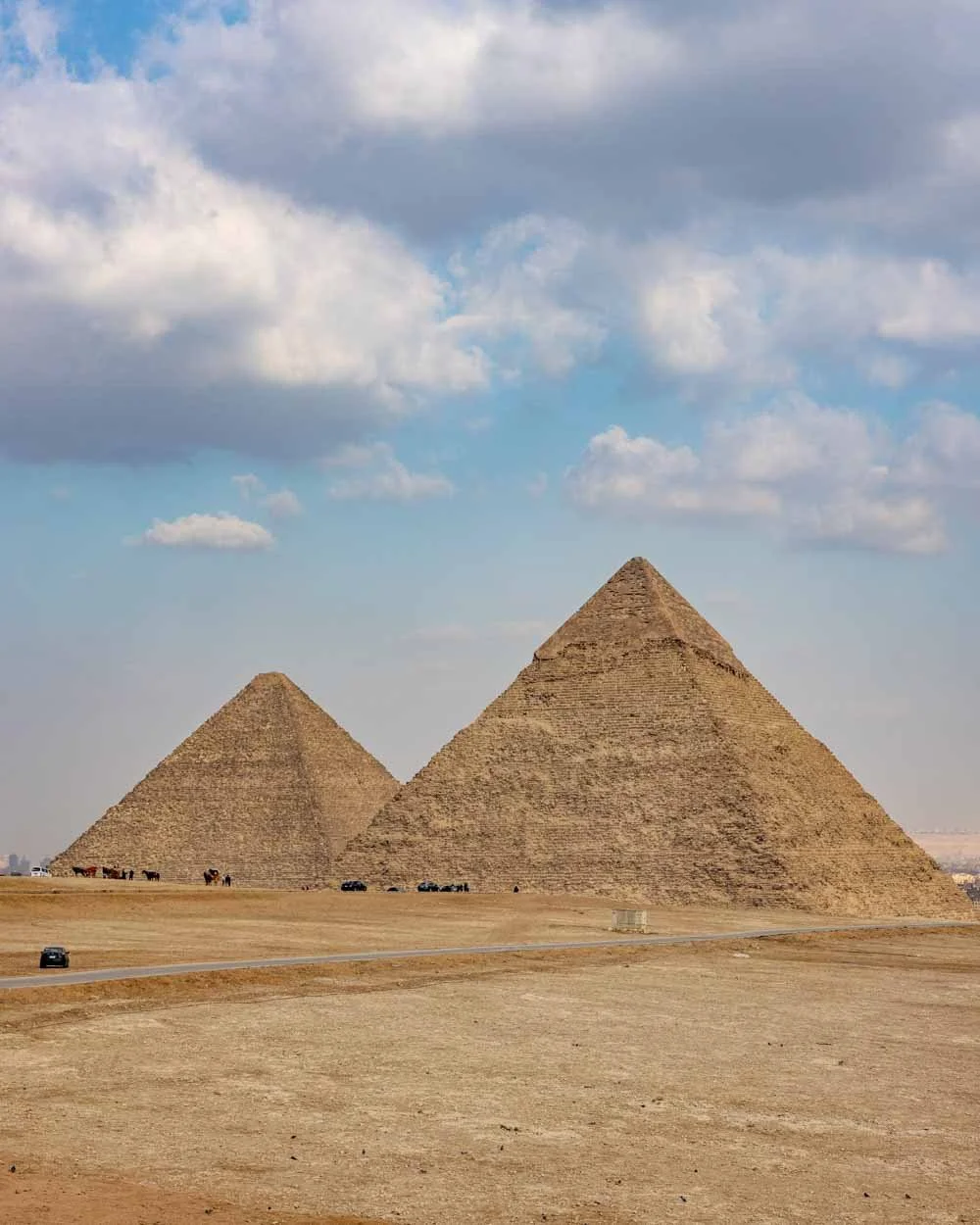
The largest of the three Giza pyramids, originally rising about 146 meters and built from an estimated 2.3 million limestone blocks. It held the record as the tallest man-made structure on Earth for roughly 3,800 years.
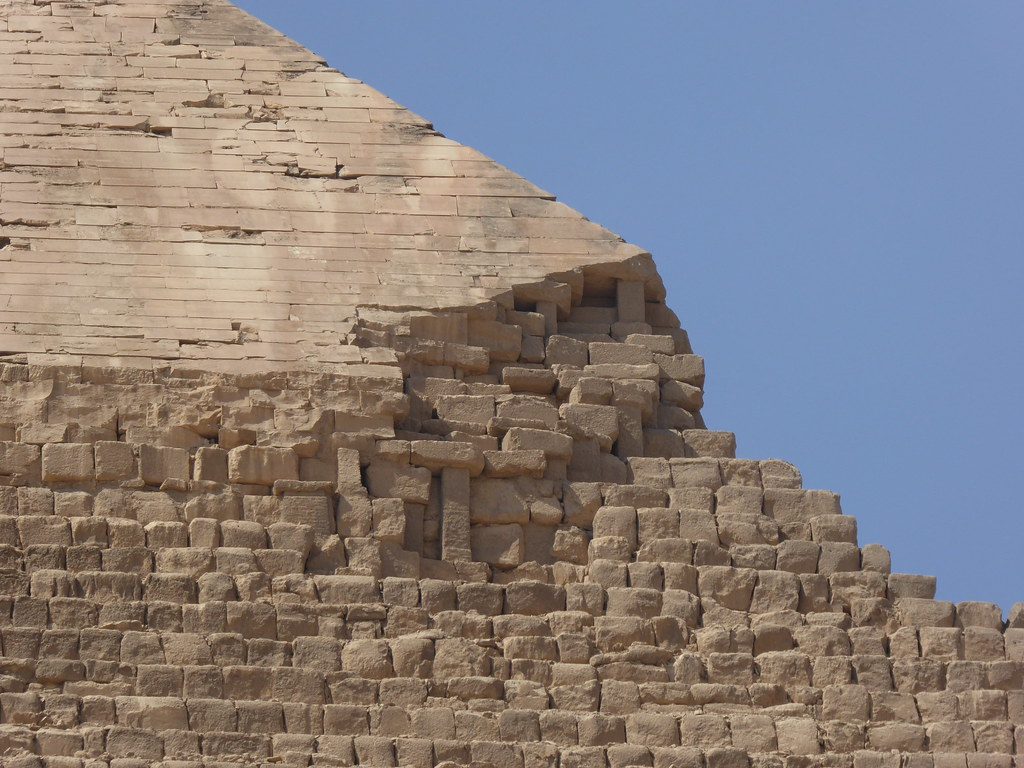
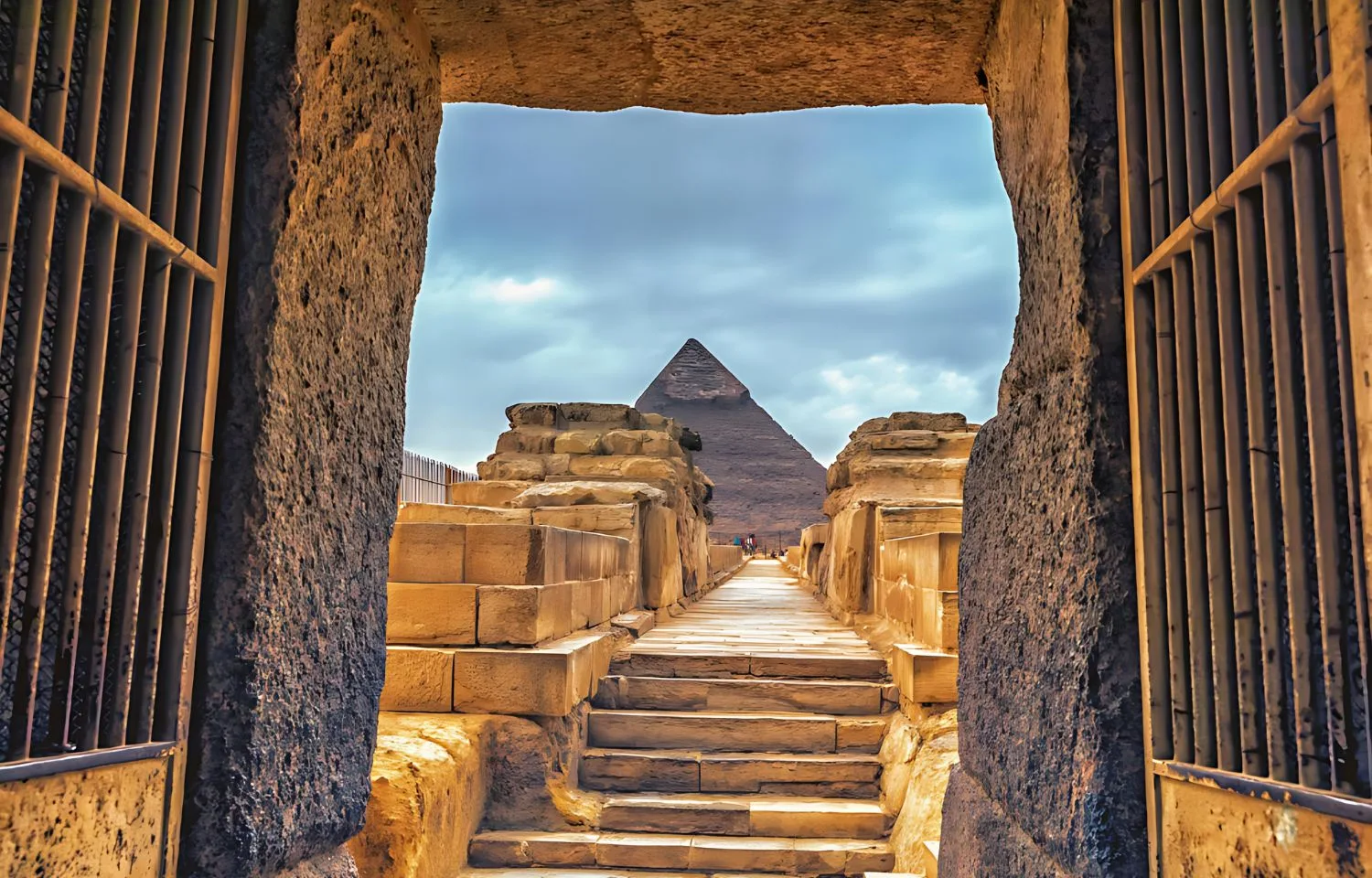
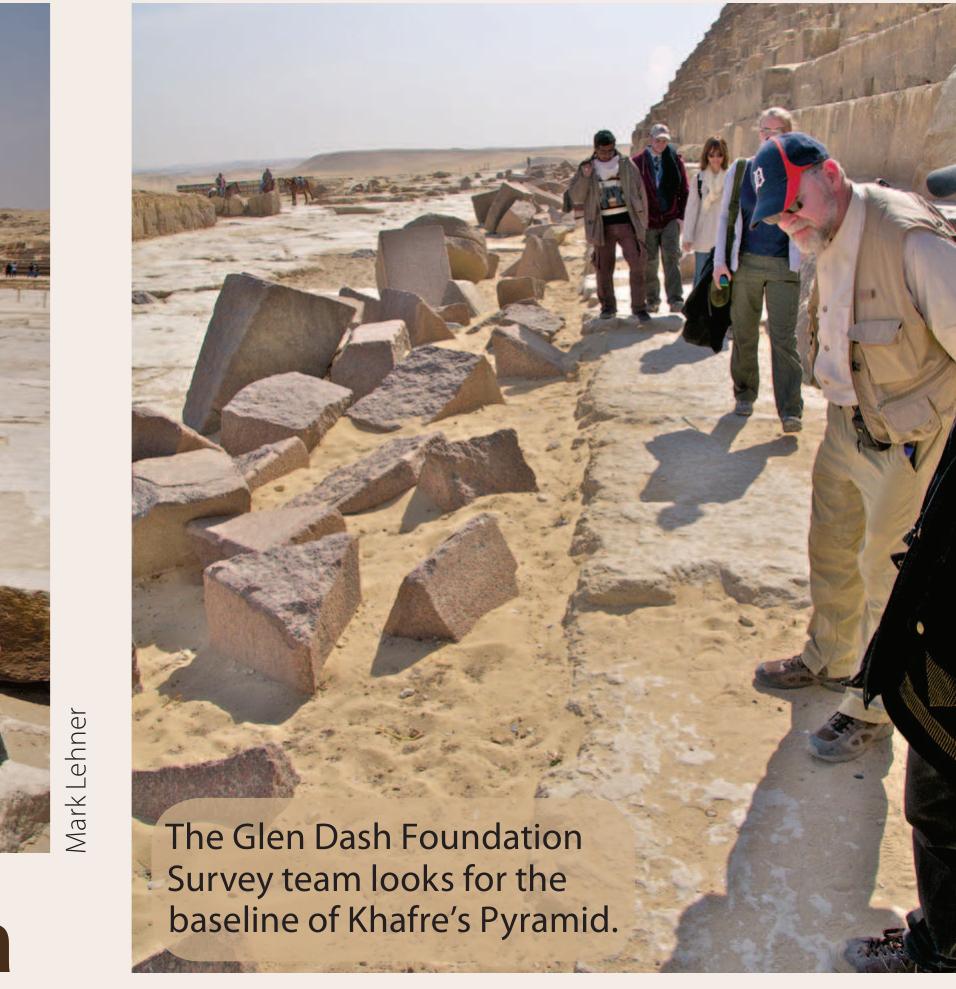
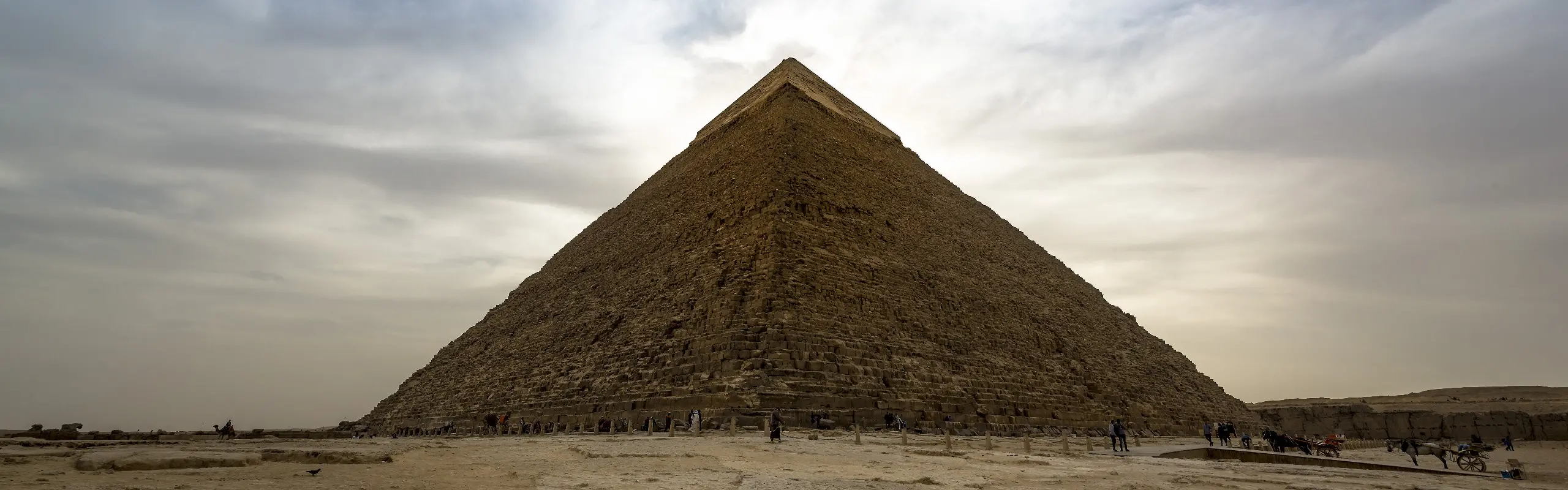
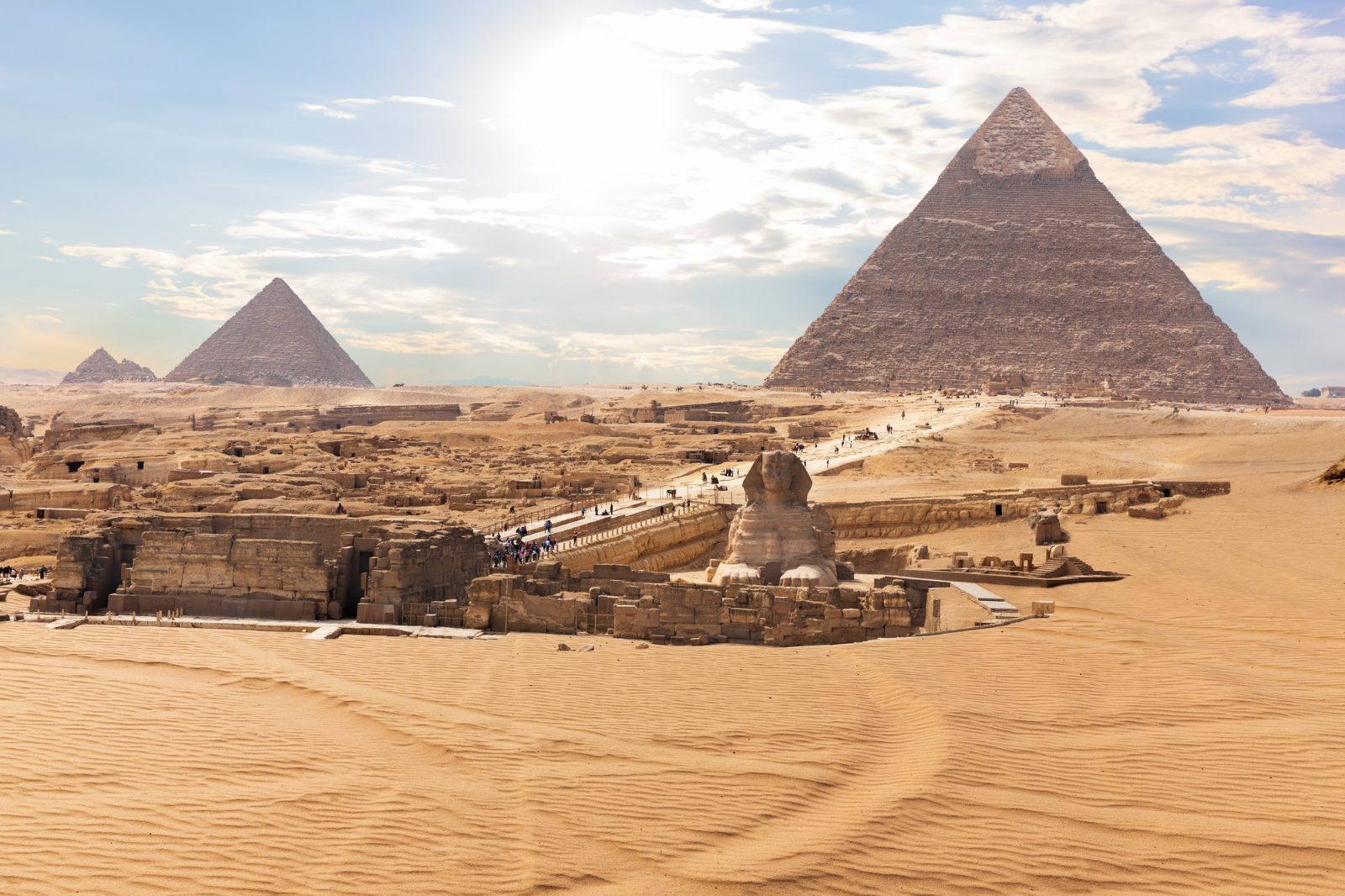
The second-tallest pyramid on the plateau, still capped with patches of its original smooth Tura limestone casing near the summit. Its causeway once led directly to the Great Sphinx below.
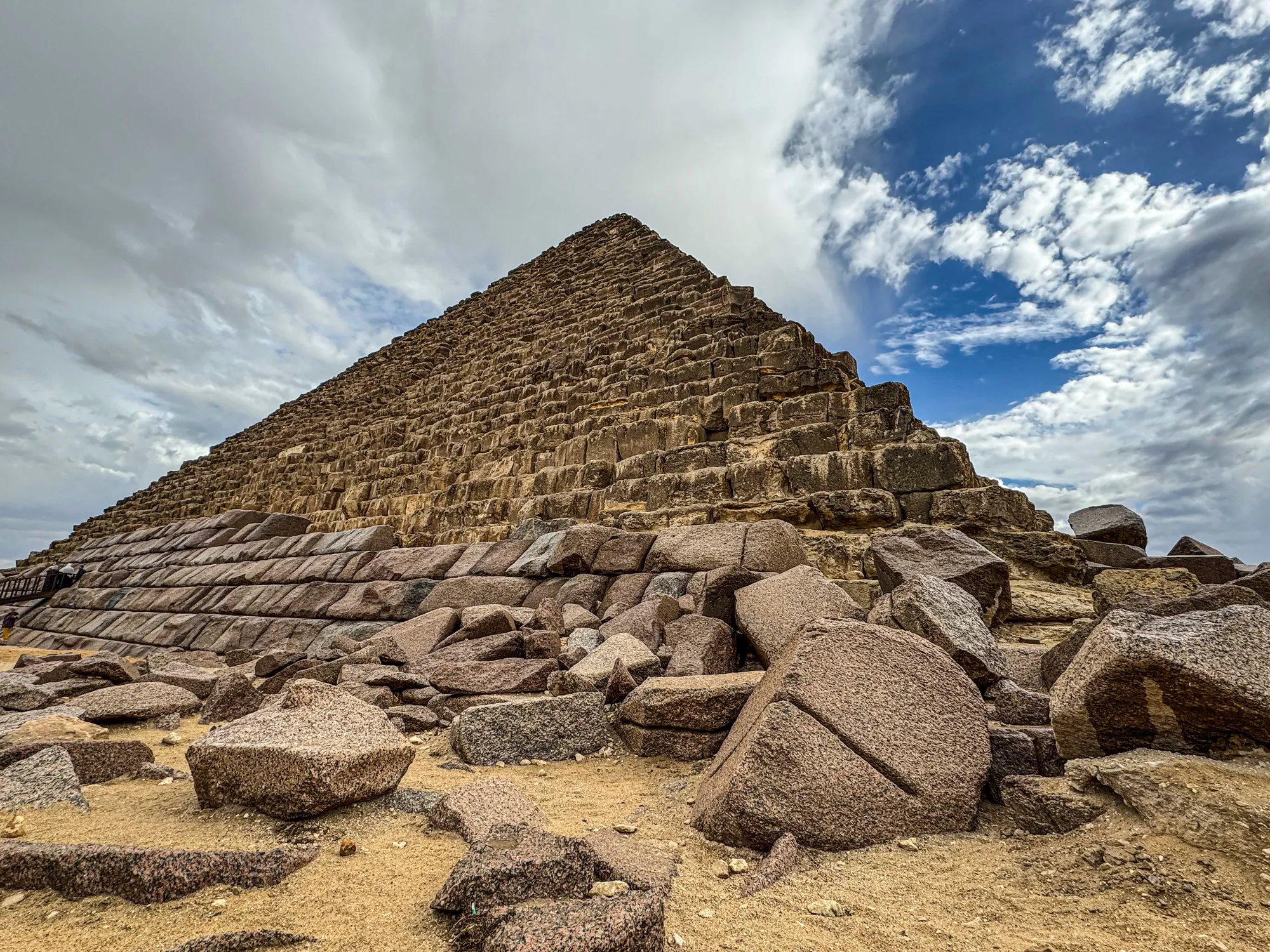
The smallest of the three principal pyramids, distinguished by a lower course of dark granite blocks instead of limestone. Archaeological evidence suggests its complex was left unfinished at the time of Menkaure's death.
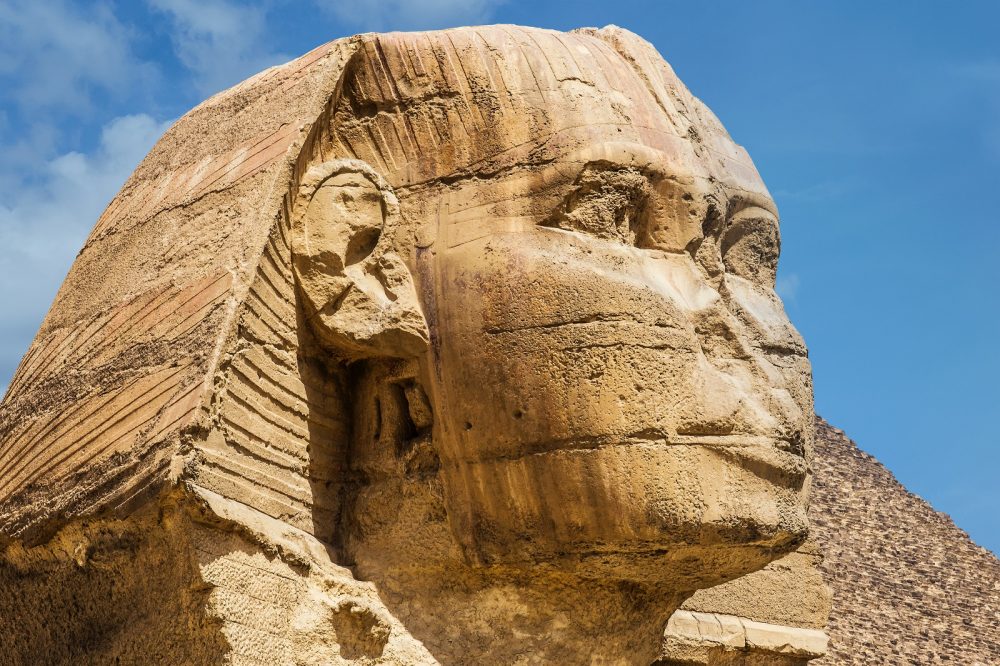
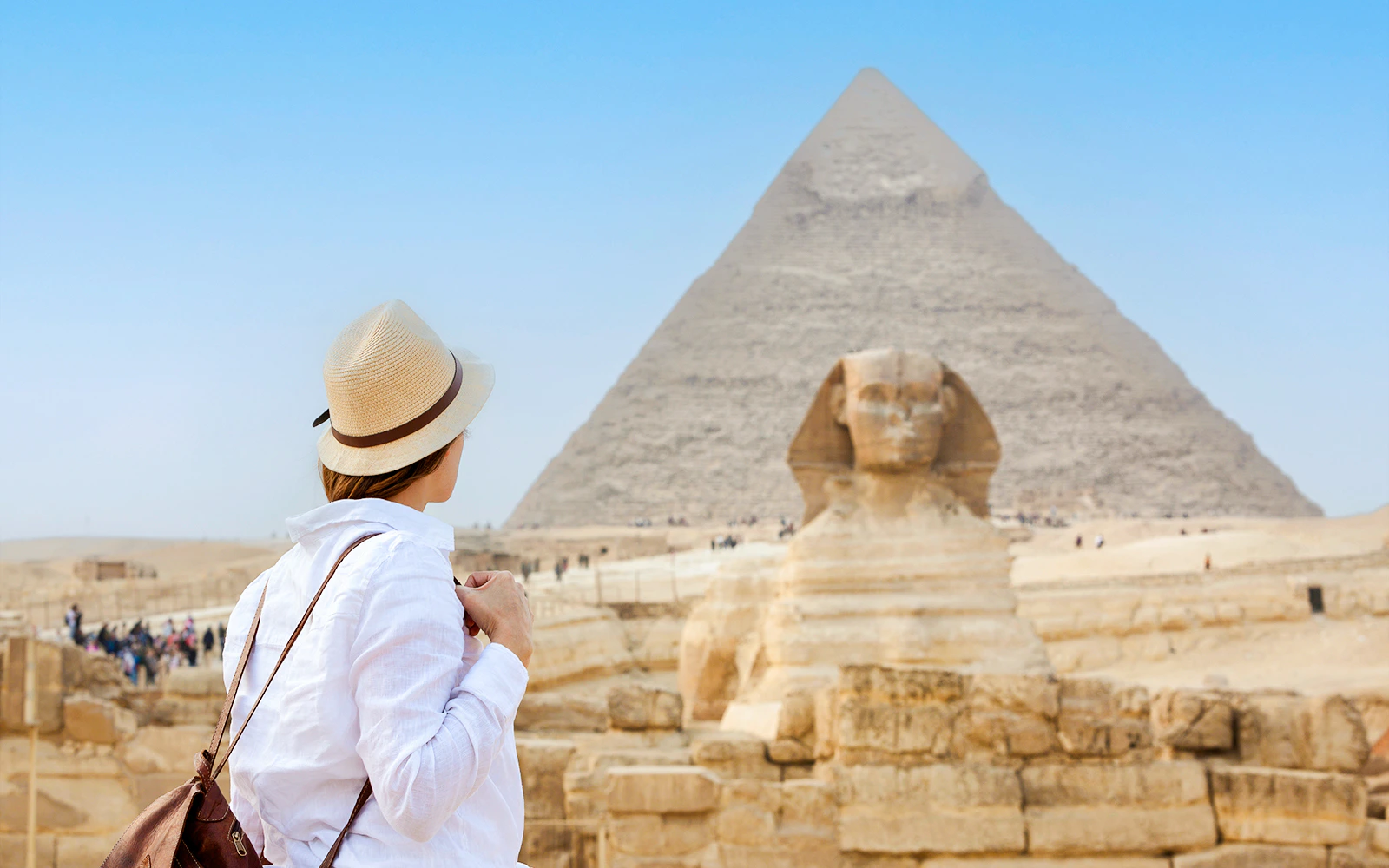
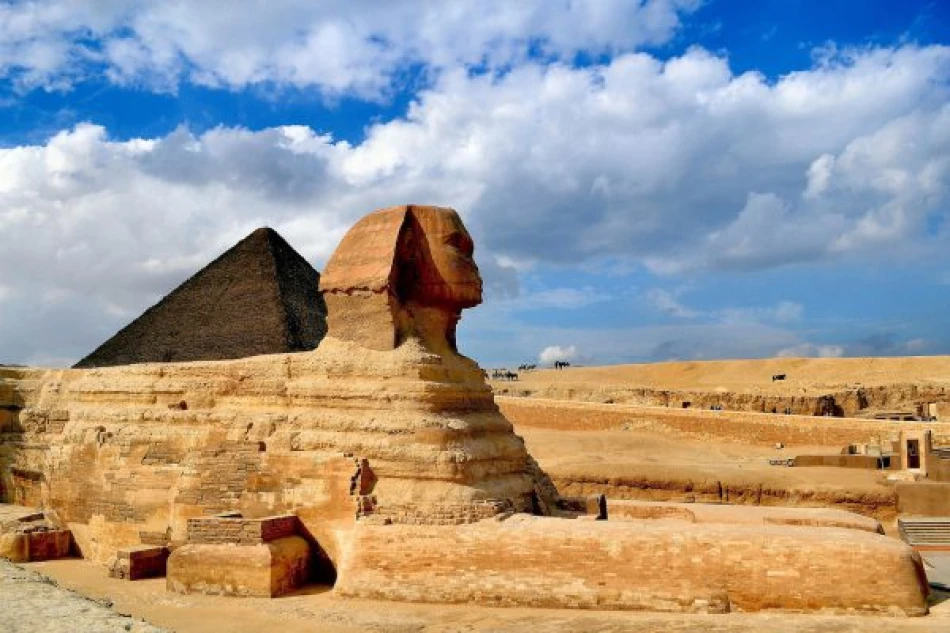
A recumbent limestone statue with a lion's body and a human head, carved directly from bedrock and measuring about 73 meters long. Its nose is missing, a detail long misattributed to Napoleon's soldiers despite earlier historical sketches showing the damage.
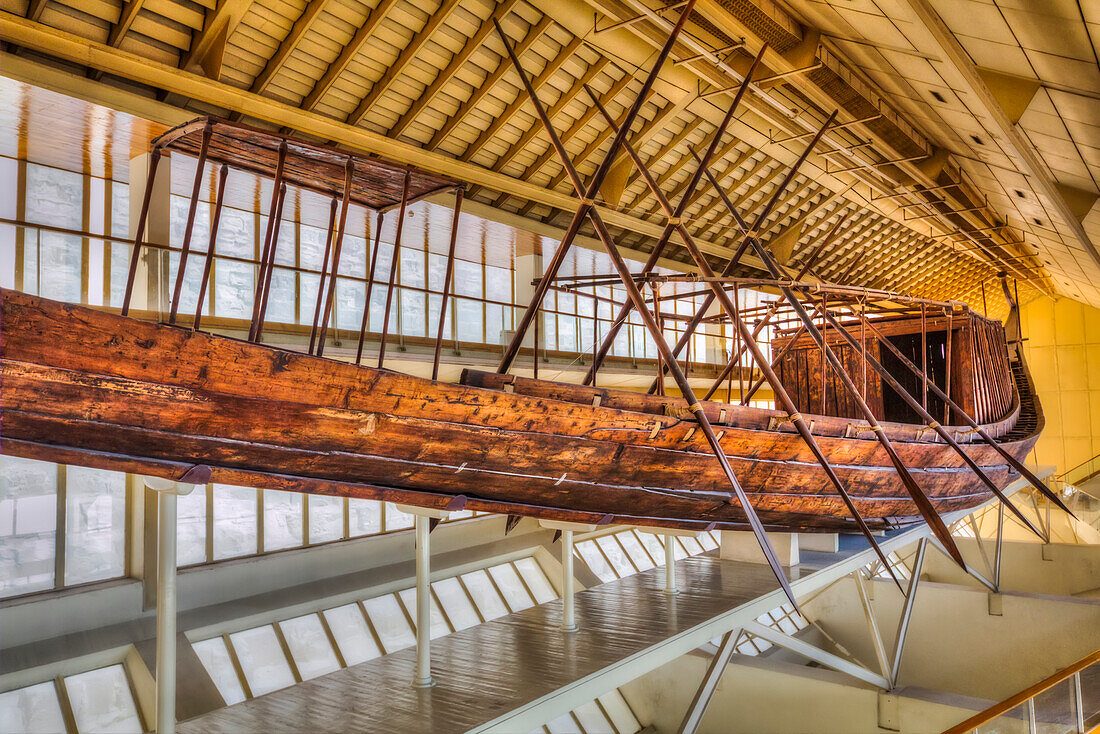
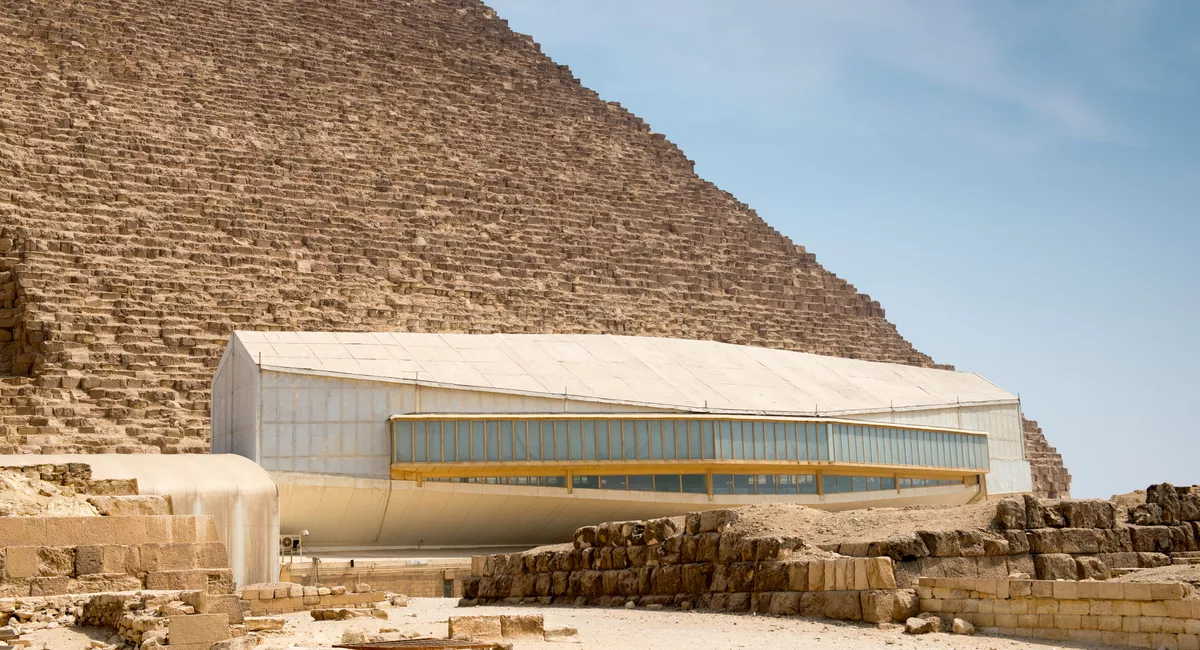
A museum built to house a full-size cedar wood funerary boat discovered dismantled in 1,224 pieces near the Great Pyramid. Egyptologists spent over a decade reassembling the vessel before it went on display.
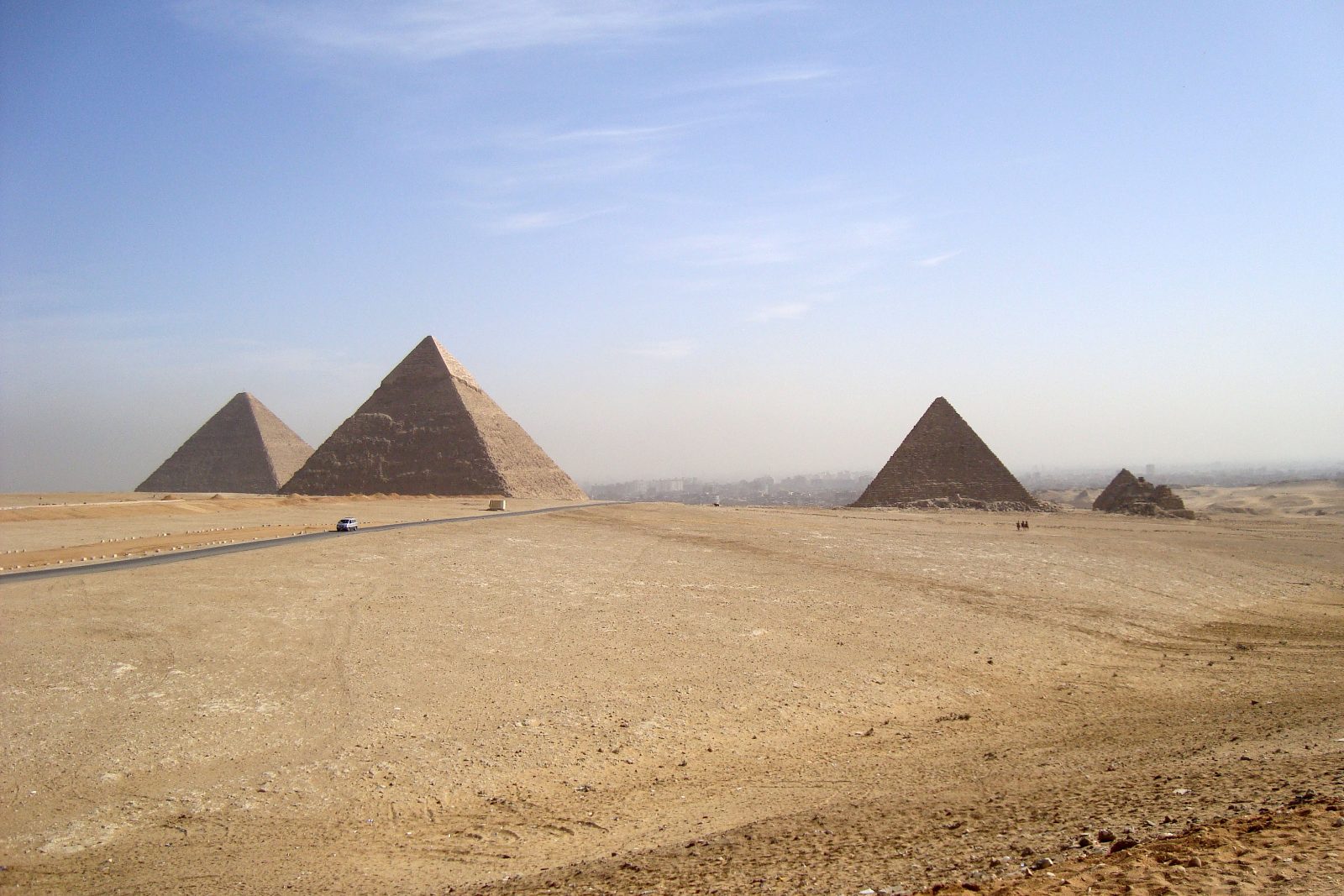
A raised desert overlook south of the main complex offering a single sightline across all three pyramids. It is the most common vantage point for wide-angle photographs and camel-mounted views of the site.
You depart Hurghada before dawn, the Red Sea's indigo edge still visible as your private vehicle climbs west into the Eastern Desert. Your driver traces the old caravan road, stopping once at a highway rest house where Bedouin tea comes in thumb-sized glasses.
By eight o'clock you cross the Nile at Luxor's modern bridge, the valley's green ribbon suddenly vivid after 250 kilometres of beige.
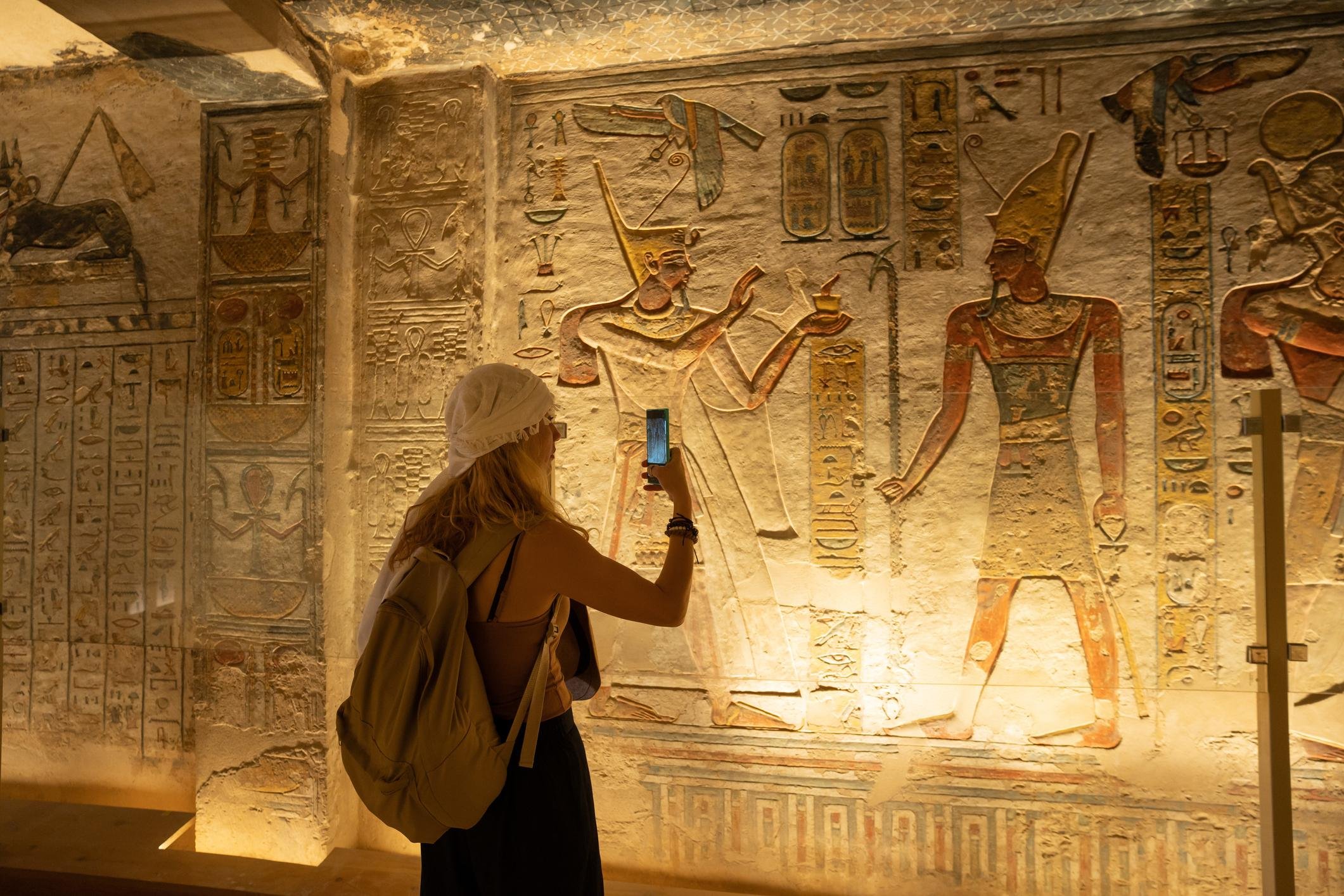
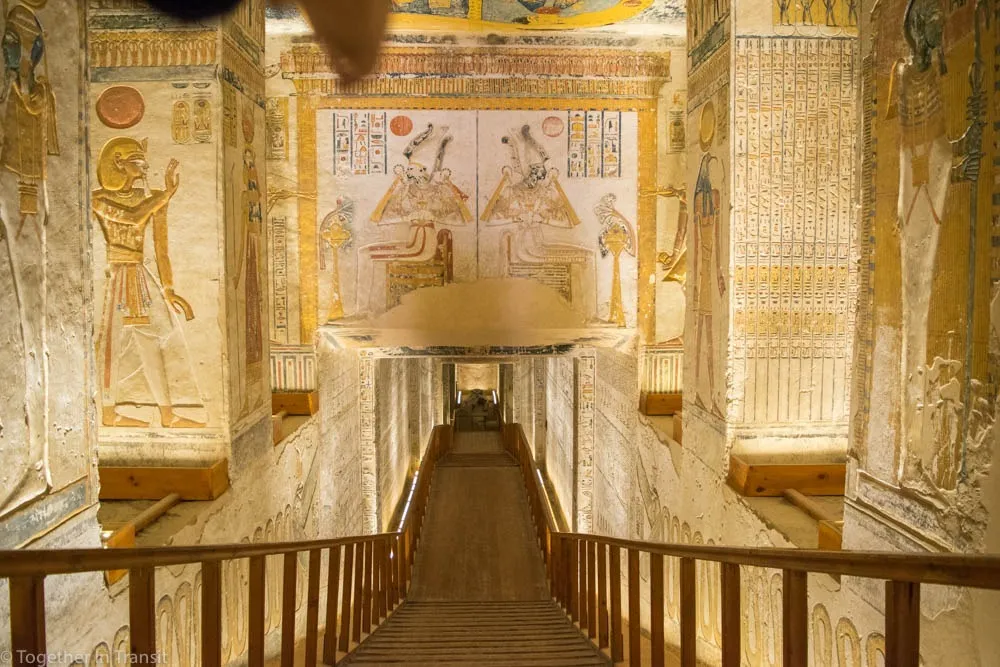
Your guide leads you into the Valley of the Kings through a turnstile beneath sheer cliffs. You descend into Ramses VI's tomb, the corridor sloping 30 metres underground, and your eyes adjust to the painted ceilings—star charts, baboon-headed gods, the sun's nightly journey through twelve gates. In Tutankhamun's smaller chamber, you stand where Carter's team photographed the nested shrines in 1923, the walls still bearing their hasty plaster repairs.
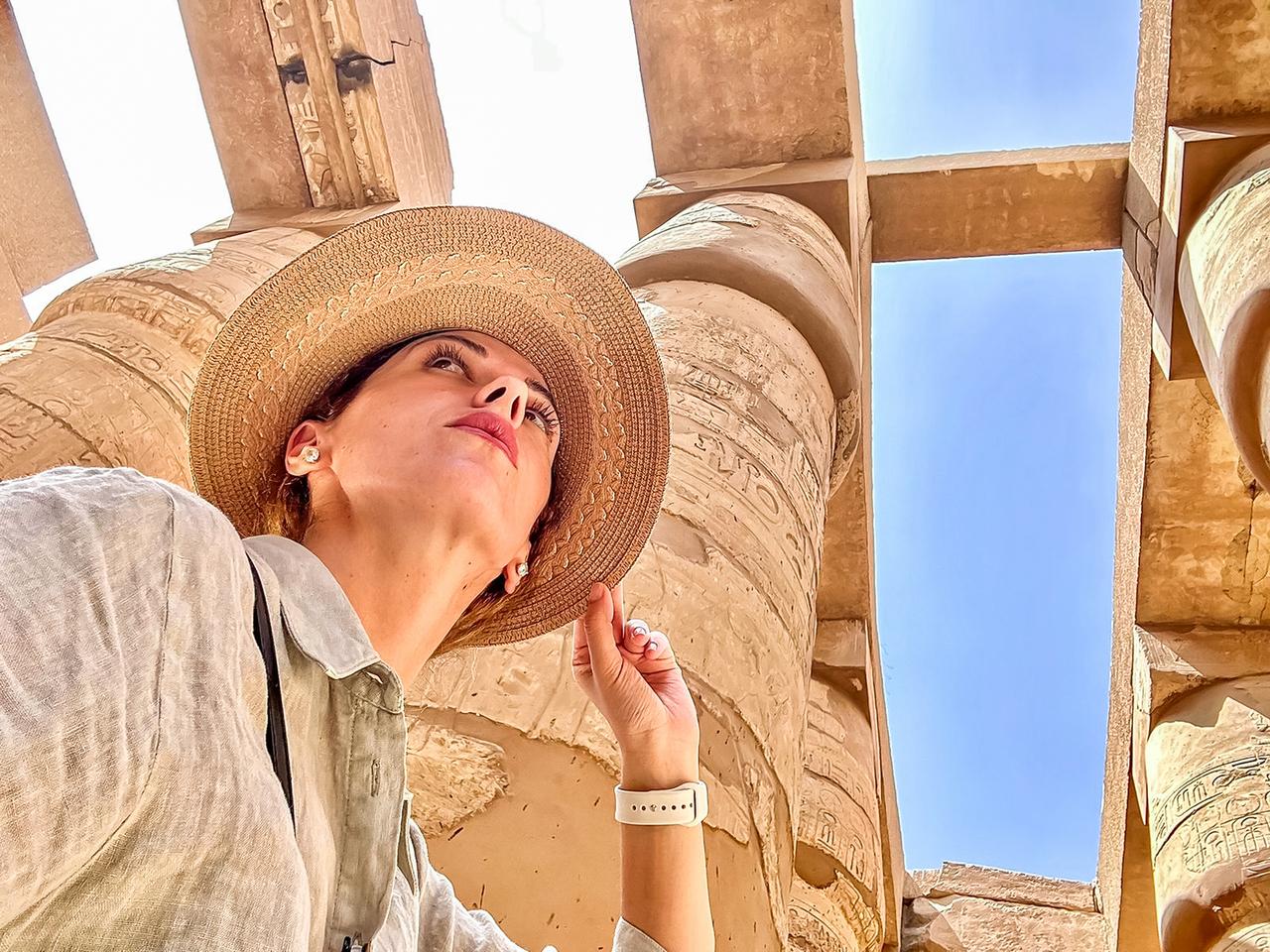
After lunch near the Colossi of Memnon, you cross back to Karnak. You walk the hypostyle hall's central aisle, craning at columns that dwarf you, then circle the sacred lake where ibises once waded. By four o'clock you are threading back through the desert, the western hills turning rose behind you, your Hurghada hotel 90 minutes ahead.
All the details about your upcoming adventure in one place
The 280-kilometre corridor between Hurghada's Red Sea resorts and Luxor's temple precincts follows one of antiquity's most persistent trade routes, a desert highway that connected Mediterranean commerce with Nubian gold for three millennia.
Modern air-conditioned coaches complete the crossing in under four hours, retracing the Nile's western arc through limestone plateaus where Roman cohorts once marched and Mamluk caravans watered their camels. The journey itself carries historical weight: Napoleon's savants sketched these same escarpments in 1799, and Howard Carter rode this route by donkey cart in 1922, fresh from discovering Tutankhamun's sealed tomb.
Luxor Day Tour from Hurghada options centre on the west bank necropolis, where 63 royal tombs burrow into the Valley of the Kings' chalk cliffs. The site's significance lies not in monumental scale—most entrances are modest doorways—but in what survived beneath: corridors painted with Amduat underworld guides, sarcophagi weighing 20 tonnes, and the only pharaonic burial found substantially intact. Tutankhamun's four nested coffins, now split between Luxor Museum and the Grand Egyptian Museum, required eight men to lift. The valley's arid microclimate preserved pigments that would have flaked away in Cairo's humidity: cobalt blues made from crushed lapis, ochre reds from Aswan's iron deposits, lamp-black outlines still sharp after 3,200 years.
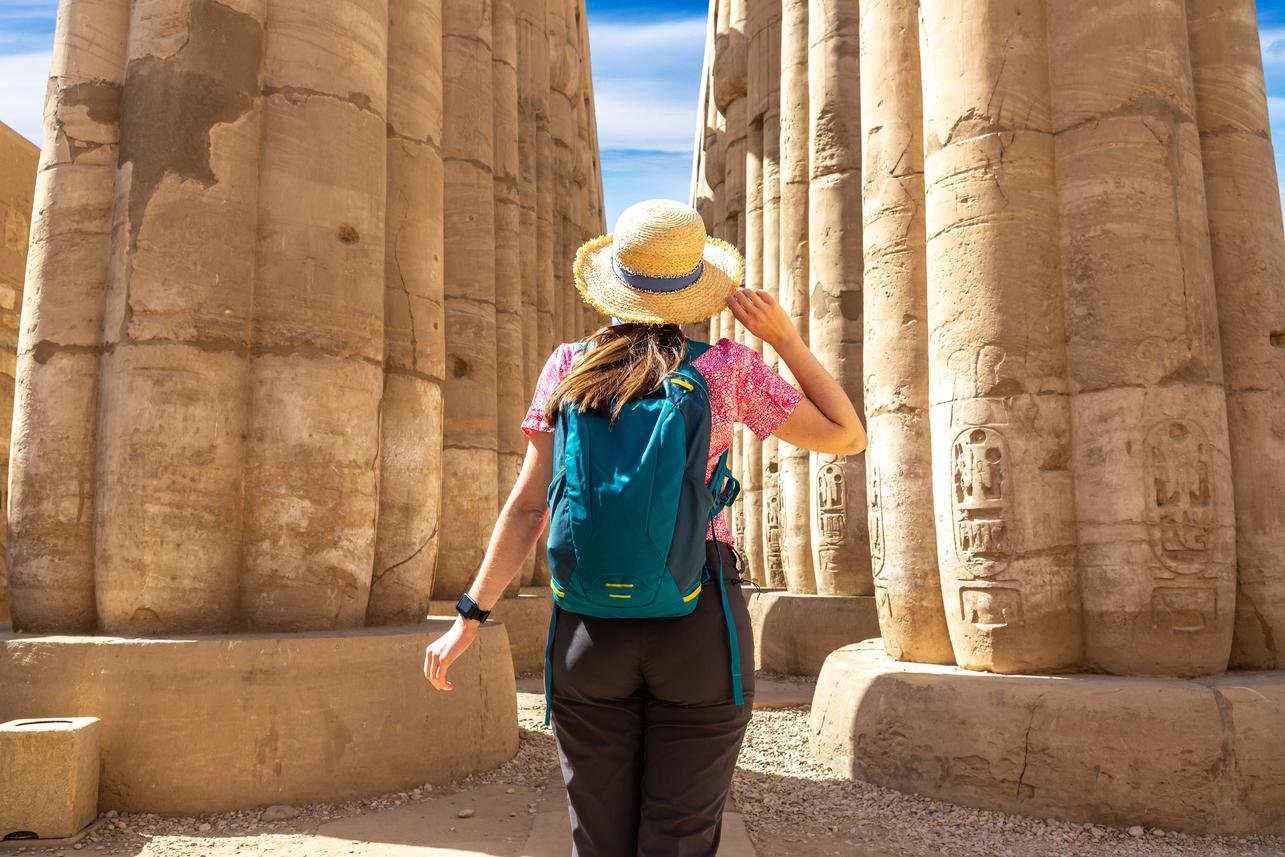
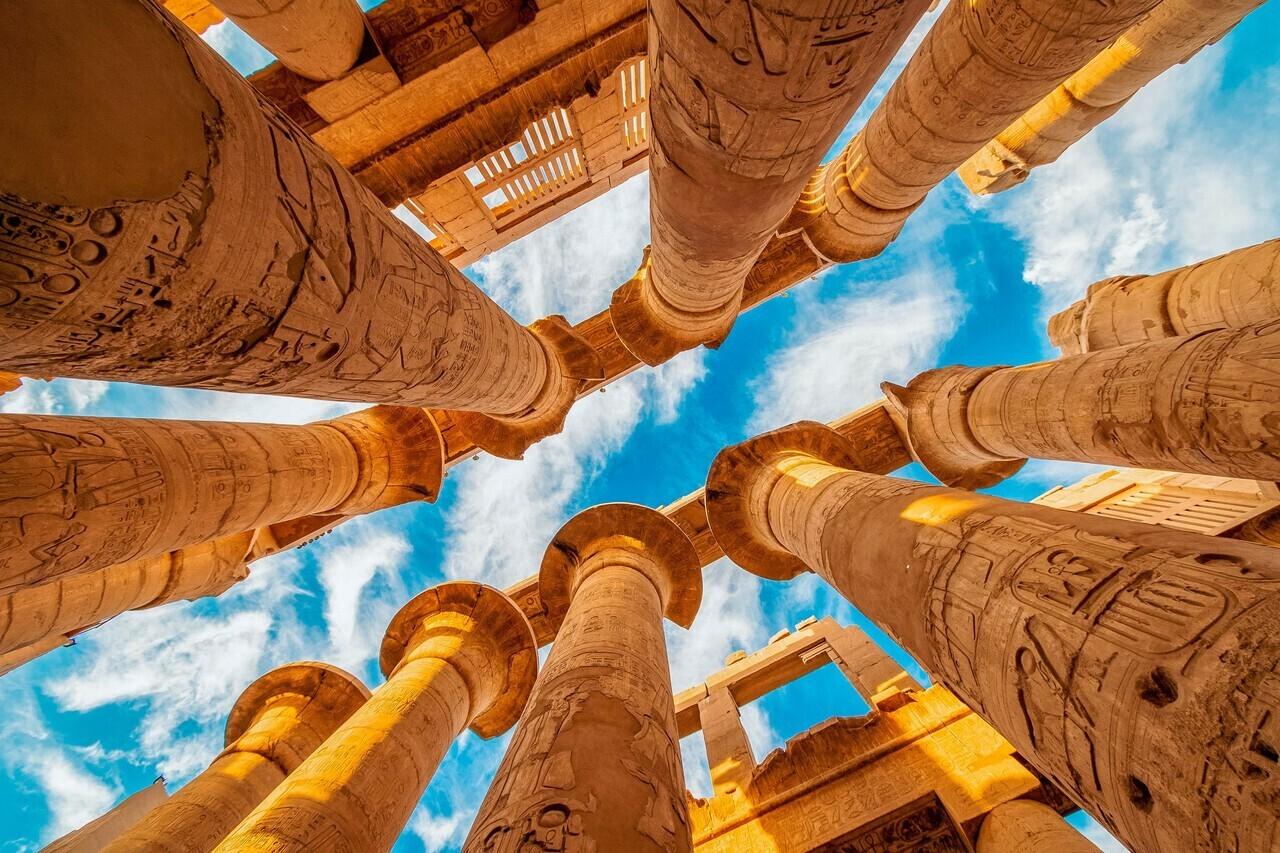
Across the Nile, Karnak Temple's hypostyle hall demonstrates structural ambition on a different order. Its 134 columns rise 21 metres, each capital wide enough to hold 50 standing adults, and the central nave once supported stone roof slabs weighing 65 tonnes apiece. Pharaohs from the Middle Kingdom through the Ptolemaic period added pylons, obelisks, and sanctuary chambers, creating a 100-hectare ritual complex that functioned continuously for 2,000 years. The sacred lake supplied water for daily purification rites; stone barques carried divine statues during festival processions; priests recorded Nile flood heights on nilometers that still bear their calibration marks. Hurghada to Luxor private day trip itineraries typically allocate 90 minutes here, enough to walk the main axis from the first pylon to the Festival Hall of Thutmose III and photograph the avenue of ram-headed sphinxes at golden hour.

The 280-kilometre corridor between Hurghada and Luxor follows one of antiquity's most persistent trade routes.
Shoulders and knees covered is recommended out of respect for local custom, even though the Giza Pyramid Complex itself is an open-air site with no strict enforcement. Lightweight, breathable fabrics work best given the desert sun, and closed-toe shoes help on the sandy, rocky ground around the Great Pyramid and the Sphinx enclosure.
Bags pass through an x-ray scanner and a metal detector at the plateau entry gates near Al Haram. Guides on a private hurghada to luxor private day trip typically handle ticket queues at this checkpoint, but each visitor's bag is still screened individually.
Personal photography and video with handheld cameras and phones is included in the standard 600 EGP entrance fee. Drones are prohibited without a separate government permit, and tripods or professional rigs can draw attention from site security near the Sphinx.
Children generally find the scale of the Great Pyramid and the camel and horse vendors around the plateau engaging, though the site offers little shade for younger kids during midday heat. Strollers struggle on the sand and gravel, so a front or back carrier is more practical for toddlers.
The main viewpoint plaza and the road facing the three pyramids are accessible by car and reasonably flat for wheelchairs. Interiors of the pyramids themselves involve narrow, steep, low-ceilinged passages that are not wheelchair accessible, and the Sphinx enclosure has some stepped terrain.
There are no formal cafés inside the ticketed plateau area, only scattered kiosks and vendors selling bottled water and snacks near the entrance. Most private itineraries build in a lunch stop at a nearby restaurant in Giza after the pyramid visit rather than eating on-site.
;Tue
Hours
Daily 08:00–17:00, last ticket sales around 16:00
Opening hours
08:00 – 17:00
Getting there
City-center access via metro and bus
Accessibility
Most experiences are wheelchair-friendly — check individual tours
What to bring
Comfortable shoes, water, phone for mobile voucher
Car · 4-5 hours one way · Included in private tour packages
A private vehicle is the standard way to reach the Giza Pyramid Complex from Hurghada, following the Red Sea coastal road and desert highway inland toward Cairo and Giza. The drive covers roughly 400 km and takes about 4-5 hours each way depending on stops.
Private tour bookings can typically be cancelled up to 24 hours before the scheduled pickup for a full refund. The 600 EGP Giza plateau entrance fee is paid on-site and is non-refundable once tickets are purchased at the gate.
Recommended time
Full day (12-14 hours door to door)
For groups booking a private hurghada to luxor private day trip, the rhythm is set by pre-dawn pickup, since Hurghada sits roughly 4-5 hours from the Luxor temple circuit and a comfortable window for tombs and monuments still needs to fit before the return drive. Private vehicles let a group hold the 08:00-10:00 arrival slot at the first site for cooler air and thinner queues, then move through Karnak and Luxor's west bank sites at a relaxed pace once tour coaches thin out. Add extra time if your group wants unhurried photo stops or a sit-down lunch; subtract only the padding, not the driving, since road time is fixed. Queue reality is minimal for a private group compared to coach-tour lines, since a dedicated driver and guide can sequence stops around when each site is busiest.
Crowd levels through the day
Weather · crowds · average price — dots go green to amber to red as each metric rises.
Daytime highs ease into the high 20s to low 30s Celsius after the summer heat, making October and November comfortable months for a hurghada to luxor private day trip. Crowds are moderate and build toward the winter holiday season.
Vendors, restroom attendants, and camel ride operators around the plateau rarely have change, so small denominations of Egyptian pounds make transactions smoother.
Al Haram, Nazlet El-Semman, Giza Governorate, Egypt
Primary vehicle drop-off and ticket checkpoint for the pyramid complex
Get directionsThe Giza Pyramid Complex stands on a limestone plateau west of Cairo, constructed during Egypt's Fourth Dynasty of the Old Kingdom. Khufu commissioned the Great Pyramid around 2580 BCE, mobilizing thousands of skilled workers who quarried an estimated 2.3 million stone blocks over two decades. His son Khafre built the second pyramid and the Great Sphinx around 2558 BCE, while Menkaure completed the third pyramid by 2510 BCE. These monuments served as royal tombs designed to facilitate the pharaoh's journey to the afterlife, their internal passages aligned with stellar constellations worshipped in ancient Egyptian cosmology. Luxor, ancient Thebes, rose to prominence during the Middle Kingdom and reached its zenith under the New Kingdom pharaohs from 1550 BCE onward. Amenhotep III began constructing Karnak's Hypostyle Hall around 1390 BCE, a forest of 134 columns that Seti I and Ramesses II later completed. The Valley of the Kings became the royal necropolis after 1500 BCE, when Thutmose I abandoned pyramid burial in favor of hidden rock-cut tombs. Sixty-three tombs were carved into the valley's limestone cliffs over five centuries, including the elaborate chambers of Seti I and Ramesses VI. Howard Carter's 1922 discovery of Tutankhamun's intact tomb revealed 5,398 objects sealed since 1323 BCE, including the gold funerary mask now displayed in Cairo's Egyptian Museum. Many travelers booking hurghada to luxor private day trip tours combine these two UNESCO World Heritage sites in a single extended journey, though the 670-kilometer distance requires early departure and premium private logistics for groups. The Giza pyramids survived medieval stone quarrying that stripped their Tura limestone casing, while Luxor's monuments endured Coptic occupation, Islamic conversion, and colonial-era excavation. Modern conservation efforts began in the 1970s under UNESCO oversight. The sites remain Egypt's most-visited archaeological destinations, drawing researchers and visitors who trace the architectural evolution from Old Kingdom pyramid construction to New Kingdom rock-cut royal tombs.
Khufu begins construction of the Great Pyramid at Giza, employing an estimated 20,000 workers over two decades.
Khafre builds the second pyramid and carves the Great Sphinx from limestone bedrock at the Giza plateau.
New Kingdom pharaohs establish Thebes as capital and begin royal burials in the Valley of the Kings.
Amenhotep III initiates construction of Karnak's Great Hypostyle Hall with its 134 massive columns.
Tutankhamun is buried in the Valley of the Kings with thousands of artifacts sealed in his tomb chambers.
Howard Carter discovers Tutankhamun's intact tomb after eight years of excavation funded by Lord Carnarvon.
UNESCO designates both Memphis and its Necropolis and Ancient Thebes with its Necropolis as World Heritage Sites.
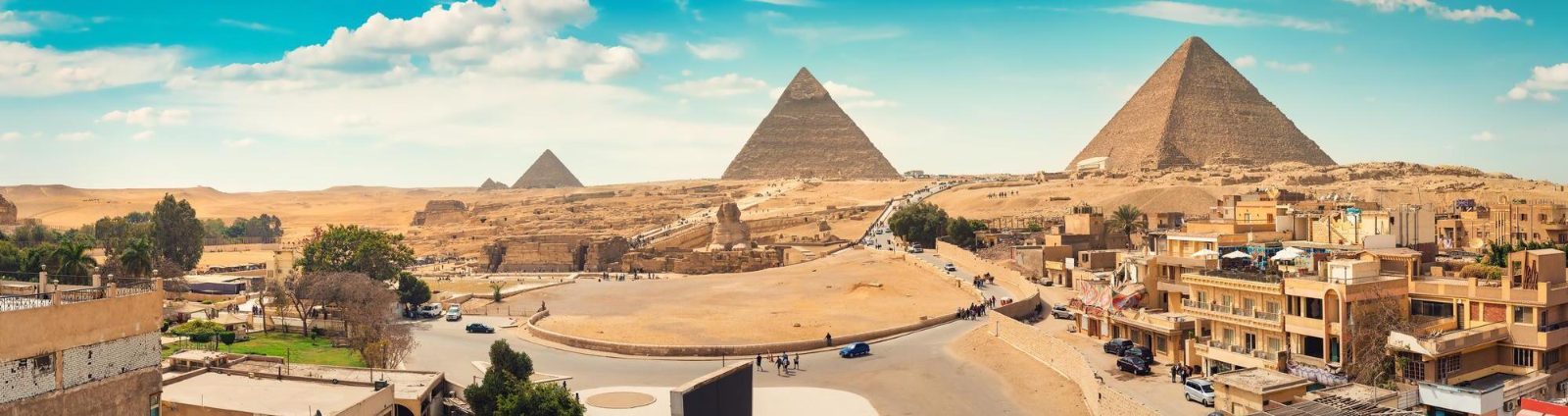
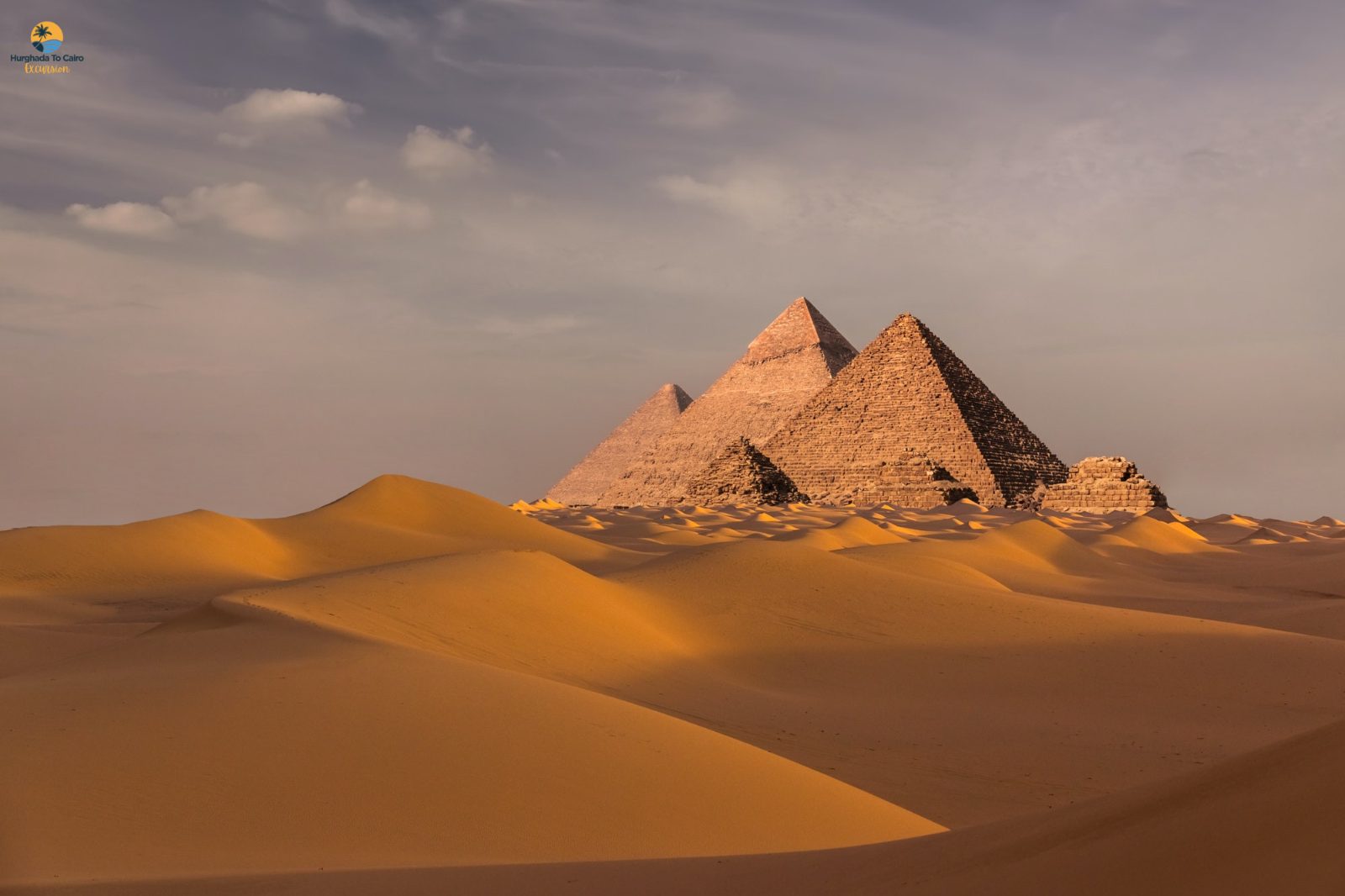
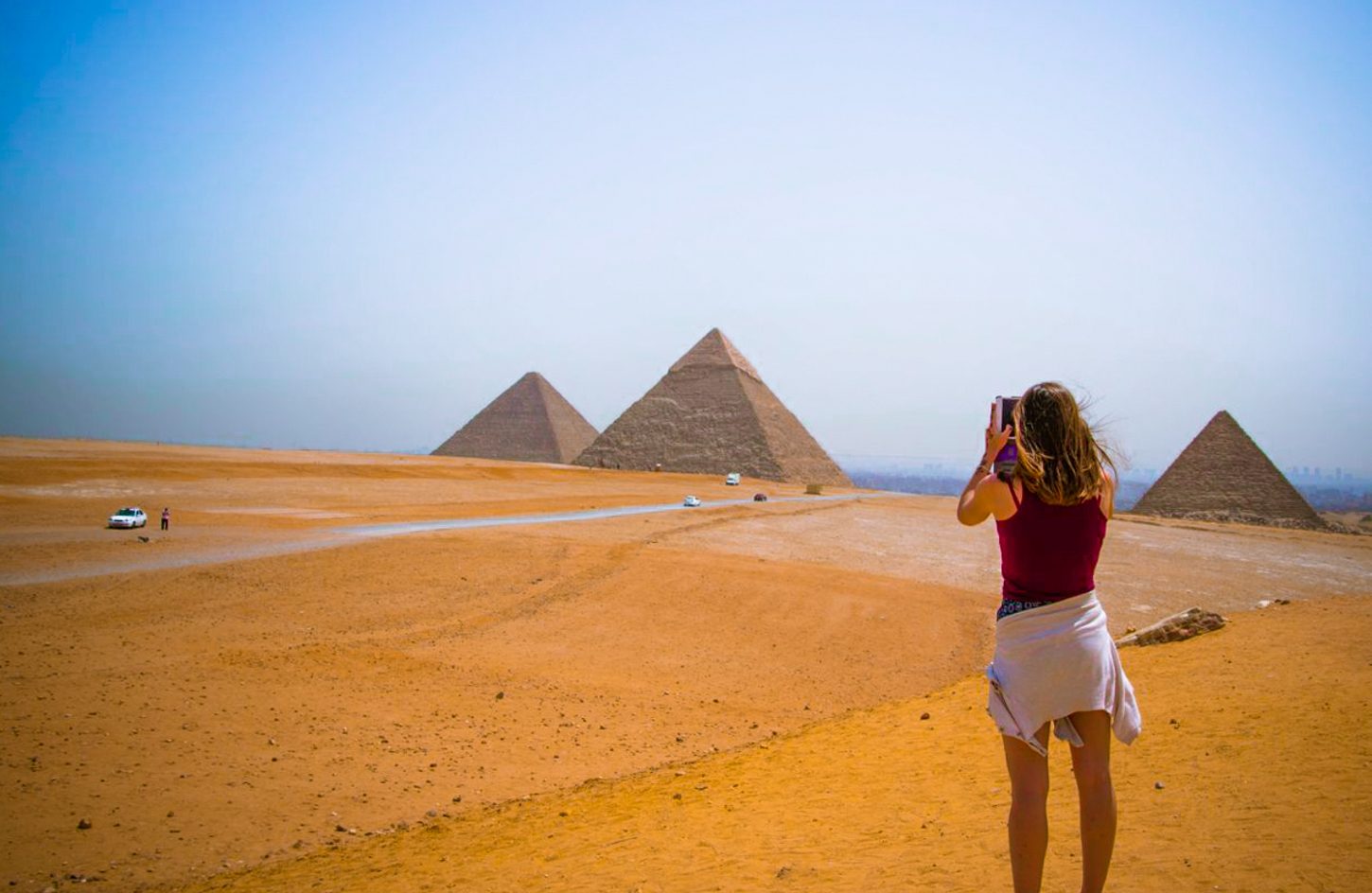
Wide desert terrace on the plateau's south ridge with all three pyramids of Khufu, Khafre and Menkaure aligned in one frame. Stand near the camel-parking area rather than closer viewpoints to fit all three structures with sky room above. A short private vehicle transfer from the main gate makes this the easiest wide shot to reach on a group itinerary.
Elevated stone platform directly facing the Great Sphinx with the Pyramid of Khafre rising behind it. Position centrally on the deck so the Sphinx's profile lines up with the pyramid's apex for the classic layered composition. Crowds build quickly after mid-morning tour buses arrive, so early positioning matters.
Raised path near the former Solar Boat Museum site on the eastern side of Khufu's pyramid, giving a steep upward angle that emphasizes the limestone blocks and scale. Stand back from the roped boundary to keep the full height of the pyramid in frame. Quieter than the main entrance plaza since most groups move past it toward the Sphinx.
The elevated desert road connecting the plateau's ticket area to Panorama Point offers a rolling-dune foreground with the pyramid trio in the middle distance. Guides on a hurghada to luxor private day trip often request a brief stop here since a private vehicle can pause where shared coaches cannot. Best shot from the roadside edge, not the driving lane.
Ground-level approach at the southern corner of Khafre's pyramid, where the remaining limestone casing stones are visible near the base. Shooting upward from close range exaggerates the pyramid's mass and geometric edges. Access is open but foot traffic increases once camel-ride touts gather nearby.
Open sandy plaza directly in front of Khufu's pyramid entrance, ideal for full-frontal shots showing the entrance chamber and stepped limestone courses. Standing roughly fifty meters back keeps the whole face in frame without a wide lens. This is the first stop for most private day trip tours and fills with tour groups by mid-morning.
A hurghada to luxor private day trip that swings through the Giza Pyramid Complex works well for families because a private vehicle and guide let you set the pace around kids rather than a bus schedule. The plateau's sand and uneven stone still take some planning, so a few logistics decisions matter more than usual with children along.
The plateau is loose sand and rough stone, so wheels are impractical; carry younger children in a soft carrier and let older kids walk in closed shoes. A private Giza pyramid tour lets your driver pull up close to each viewpoint, cutting the walking distance between stops.
Kids around 6 and up generally handle the heat, walking and camel or horse touts better than toddlers. For families with babies or very young children, keep outdoor time short and prioritize the shaded photo points near the Sphinx enclosure first.
Baby-change and dedicated family rooms are not standard at the plateau's public restrooms, so pack wipes and a portable changing mat. Restrooms are clustered near the entrance and the Sphinx area, and a private itinerary can route bathroom breaks around those points.
Book one private vehicle sized for your whole family or multi-generational group rather than splitting into a shared shuttle, since it keeps kids together with one guide and one water supply. This matters most on a full hurghada to luxor private day trip where the pyramids are just one stop among several long drives.
Split the visit into short outdoor bursts of 20 to 30 minutes with return trips to the air-conditioned car between the pyramids, the panoramic viewpoint and the Sphinx. A private driver can wait at each stop, so there is no pressure to rush kids through the sand.
Bring snacks and a refillable water bottle, since vendor food near the plateau is limited and pricier than in town. Save a proper sit-down meal for after the pyramids, once the group is back in the car heading toward the next stop.
Dining inside the plateau itself is limited to kiosks and roaming vendors, so most travelers on a hurghada to luxor private day trip eat at the cluster of view restaurants near the Giza entrance gates before or after plateau access. These sit a short drive or walk from the ticket gates and are built around Great Pyramid sightlines, making them the default stop for private groups with a driver waiting.
Sits right against the plateau wall with Great Pyramid views from every table; popular for tea or a full Egyptian mezze spread, gets busy around sunset so it suits a relaxed post-visit stop rather than a quick bite.
The upstairs seating overlooks the pyramids and is a known quick-stop for groups short on time; crowded near midday when tour buses cluster, fine for a fast, familiar meal between sites.
A shaded terrace option a few minutes from the main gate serving grilled meats and shisha alongside pyramid views; better suited to a longer lunch than a rushed stop.
Scattered near the entrance and parking areas selling bottled drinks, tea, and snacks; useful for a fast top-up but not a sit-down meal.
Everything you need to know for your journey
The Giza Pyramid Complex is open daily from 08:00 to 17:00, and a private hurghada to luxor private day trip typically times arrival for the early part of that window.
The main viewpoint plaza and roadway facing the three pyramids are accessible by car and reasonably flat, but the pyramid interiors involve narrow, steep passages that are not wheelchair accessible.
Bags pass through an x-ray scanner and metal detector at the plateau's entry gates, and each visitor is screened individually even when traveling with a private guide.
Personal photography and video are included in the standard 600 EGP entrance fee, though drones require a separate permit and are otherwise prohibited.
Arriving between 08:00 and 10:00 offers cooler temperatures and smaller crowds before midday tour buses arrive, making early booking of hurghada to luxor private day trip tickets worthwhile.
Modest dress covering shoulders and knees is recommended out of respect for local custom, along with closed-toe shoes for the sandy, rocky terrain around the Giza Pyramid Complex.
There are no formal cafés inside the ticketed plateau, only scattered kiosks selling water and snacks, so most itineraries include a restaurant stop after the pyramid visit.
A private vehicle covers the roughly 400 km, 4-5 hour drive from Hurghada to Giza along the coastal and desert highways, and drop-off occurs directly at the plateau's main gate.
Yes, children generally engage with the scale of the Great Pyramid and the Sphinx, though strollers struggle on sand and a carrier is more practical for toddlers.
Private bookings can typically be cancelled up to 24 hours before pickup for a full refund, while the 600 EGP plateau entrance fee paid on-site remains non-refundable.
The Great Sphinx, the Solar Boat Museum, and the Pyramid of Khafre and Pyramid of Menkaure all sit within a short walk or drive of the Giza Pyramid Complex.
General admission to the Giza plateau costs 600 EGP per adult foreigner, with a separate additional ticket required for entry into the pyramid interior.
A limestone statue with a lion's body and a human head, carved from a single mass of bedrock on the Giza plateau. It sits just below the causeway leading to the Pyramid of Khafre.
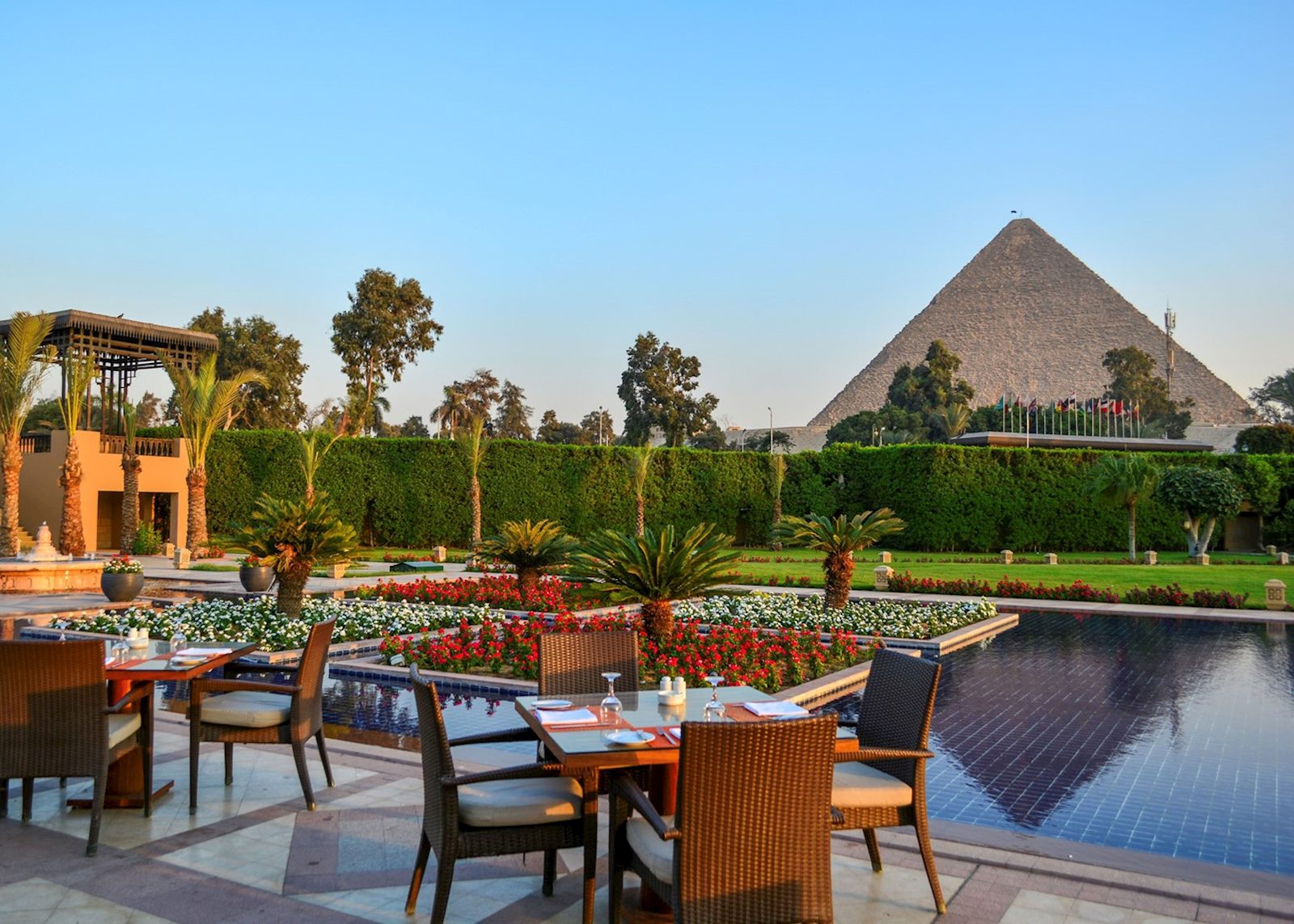
A historic hotel with gardens directly facing the Great Pyramid, popular with travelers extending their stay beyond a single day trip.
Join thousands of happy travelers who have discovered this incredible experience
Book Your Experience Now