16 h
Cairo Day Trip by Air: Pyramids, Sphinx & Museum
- Guida locale esperta
- Piccolo gruppo
- Accesso salta la fila
- Cancellazione gratuita
Cairo by air in a day, pyramids and museum in hand
Confronta le tariffe e scegli quella giusta — tutte le prenotazioni includono voucher mobile e cancellazione gratuita dove indicato.
16 h
20 h
24 h
| Esperienza | Da | Durata | Valutazione | Trasferimenti | Ritiro | Cancellazione | Prezzo | |
|---|---|---|---|---|---|---|---|---|
|
Con guida
Più popolare
Cairo Day Trip by Air: Pyramids, Sphinx & Museum
|
— | 16 h | ★ 4.9 | — | — | ✓ | €239 | Prenota → |
|
Con guida
Cairo & Giza Highlights Day Trip from Hurghada
|
Hurghada | 20 h | ★ 4.6 | ✓ | ✓ | ✓ | €67 | Prenota → |
|
Con guida
Cairo Day Trip: Pyramids & Museum from Hurghada
|
Hurghada | 24 h | ★ 4.9 | ✓ | ✓ | ✓ | €56 | Prenota → |
Worth it for first-time Egypt visitors
A day trip from Hurghada to pyramids by plane compresses what would be a grueling 10-hour bus journey into a manageable single-day excursion, trading travel fatigue for efficiency. The flight-inclusive tours listed here run roughly $180–$240 per person, covering round-trip flights, transfers, Egyptologist guides, and the 500 EGP Giza plateau admission. You'll spend approximately 3–4 hours at the pyramids and Sphinx, with museum visits added depending on the package. The value proposition holds if you're based in Hurghada with limited vacation days and the Great Pyramid of Khufu ranks high on your bucket list—flying eliminates the Red Sea–to–Cairo overland slog. Budget travelers willing to sacrifice a full day to bus transport can save $100+, but most find the time recovered worth the premium. The short ground time means you'll hit the essential landmarks without deep exploration; this is a targeted strike, not a Cairo immersion. Day trip from Hurghada to pyramids by plane tours work best for visitors who want iconic photo ops at the last surviving Wonder of the Ancient World without extending their Egypt itinerary.
Bottom line: If your Red Sea holiday has room for one splurge-day excursion and the pyramids are non-negotiable, the flight option justifies its price through recovered time and reduced exhaustion.
Most travelers who compare the two pick the flight for time saved, since a day trip from Hurghada to pyramids by plane cuts nearly eight hours of round-trip driving into a 55-minute hop each way. The overland bus tour costs less but eats most of the day on the road, leaving thin time at the Giza plateau and the Egyptian Museum.
|
Top pick Flight Day Trip |
Overland Bus Day Trip | |
|---|---|---|
| Transport method | Domestic flight, Hurghada–Cairo | Air-conditioned bus or van |
| One-way travel time | 55 minutes flight | 6–7 hours by road |
| Total day length | 13–14 hours door to door | 16–18 hours door to door |
| Wake-up time | Around 04:00–05:00 | Around 01:00–02:00 |
| Physical toll | Low fatigue | High fatigue, long sitting |
| Typical price | From $199 per person (flight-inclusive tour) | From $65–85 per person |
| Time at Giza Pyramids | Full guided visit, unhurried | Shorter, often rushed |
| Group size | Small group or private flight transfer | Larger shared bus groups |
| Best suited for | Travelers short on time or avoiding road travel | Budget travelers with a free day |
| Booking lead time | Recommended 2–3 days ahead for flight seats | Can often book 1 day ahead |
| See tickets & prices |
Verdict: The flight day trip suits anyone who wants a full, well-paced visit to the pyramids without sacrificing an entire day or night's sleep, while the overland bus remains the budget choice for travelers willing to trade comfort for a lower price.
Esperienze selezionate amate da migliaia di viaggiatori
1 day
Cancellazione gratuita
Journey from Hurghada to explore the Giza Pyramids, Sphinx, and choose between two world-class museums
16 hours
Cancellazione gratuita
Fly from Hurghada to explore Giza's iconic pyramids and choose between two world-class museums
1 day
Skip the long drive and fly to Egypt's capital for a whirlwind tour of the Pyramids, Sphinx, and a major museum
18 hours
Cancellazione gratuita
Experience Egypt's ancient treasures on an 18-hour guided journey from Hurghada to Cairo's iconic sites.
19 hours
Cancellazione gratuita
Journey from Hurghada to Cairo's ancient wonders with expert guidance and museum access
22 hours to 1 day
Cancellazione gratuita
Journey to Egypt's capital to explore ancient pyramids, historic religious sites, and bustling markets
1 day
Cancellazione gratuita
Venture beyond typical tourist paths to discover Cairo's ancient marvels and spiritual treasures in one day
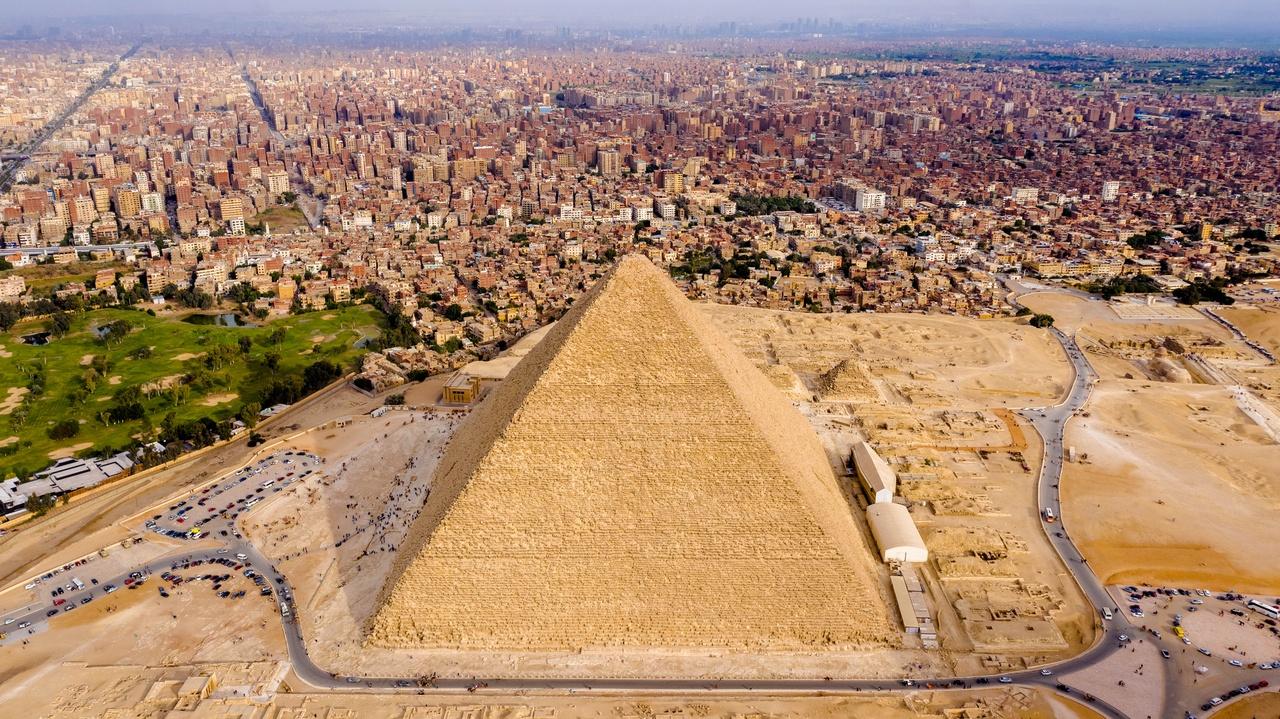
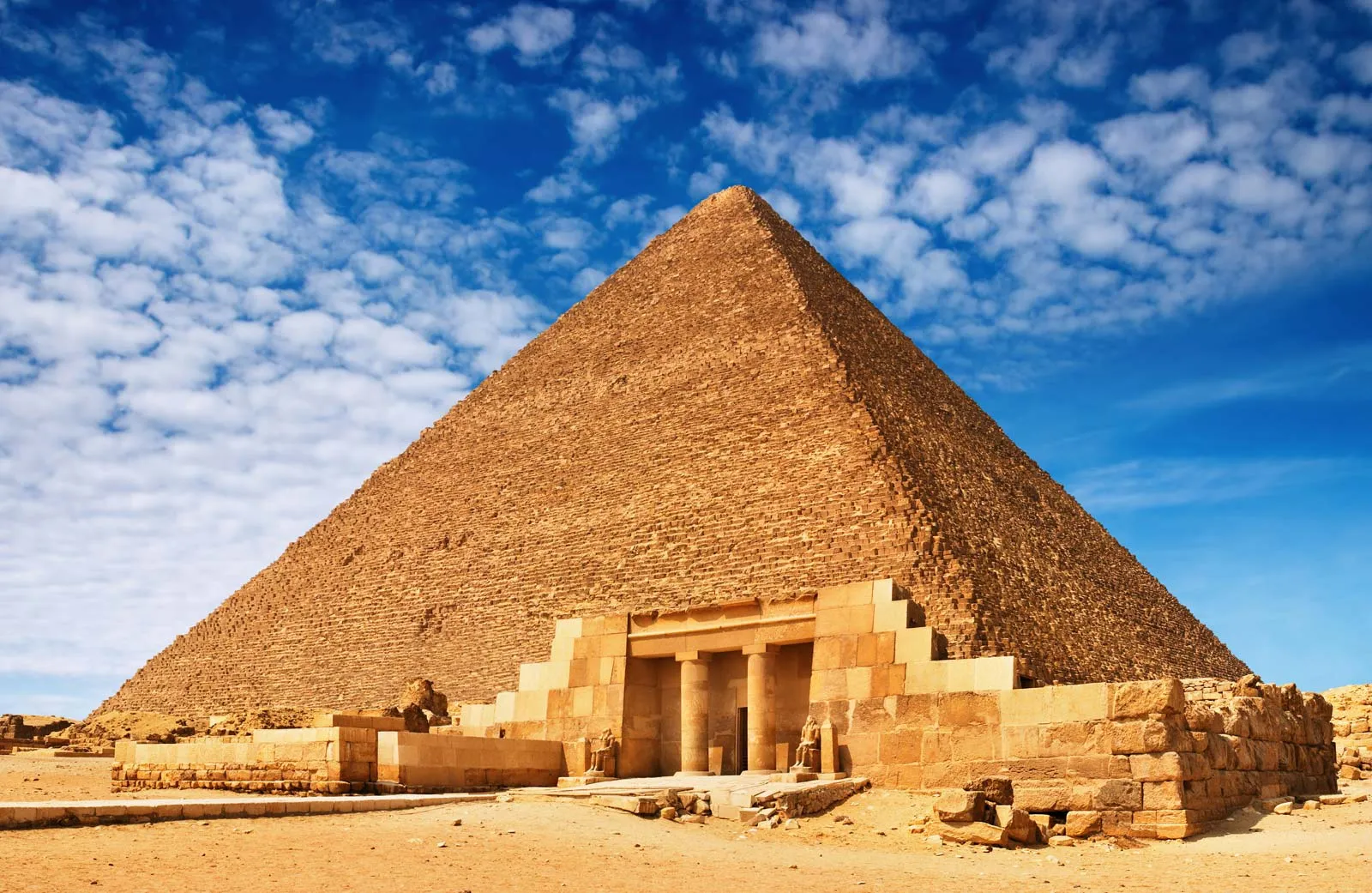
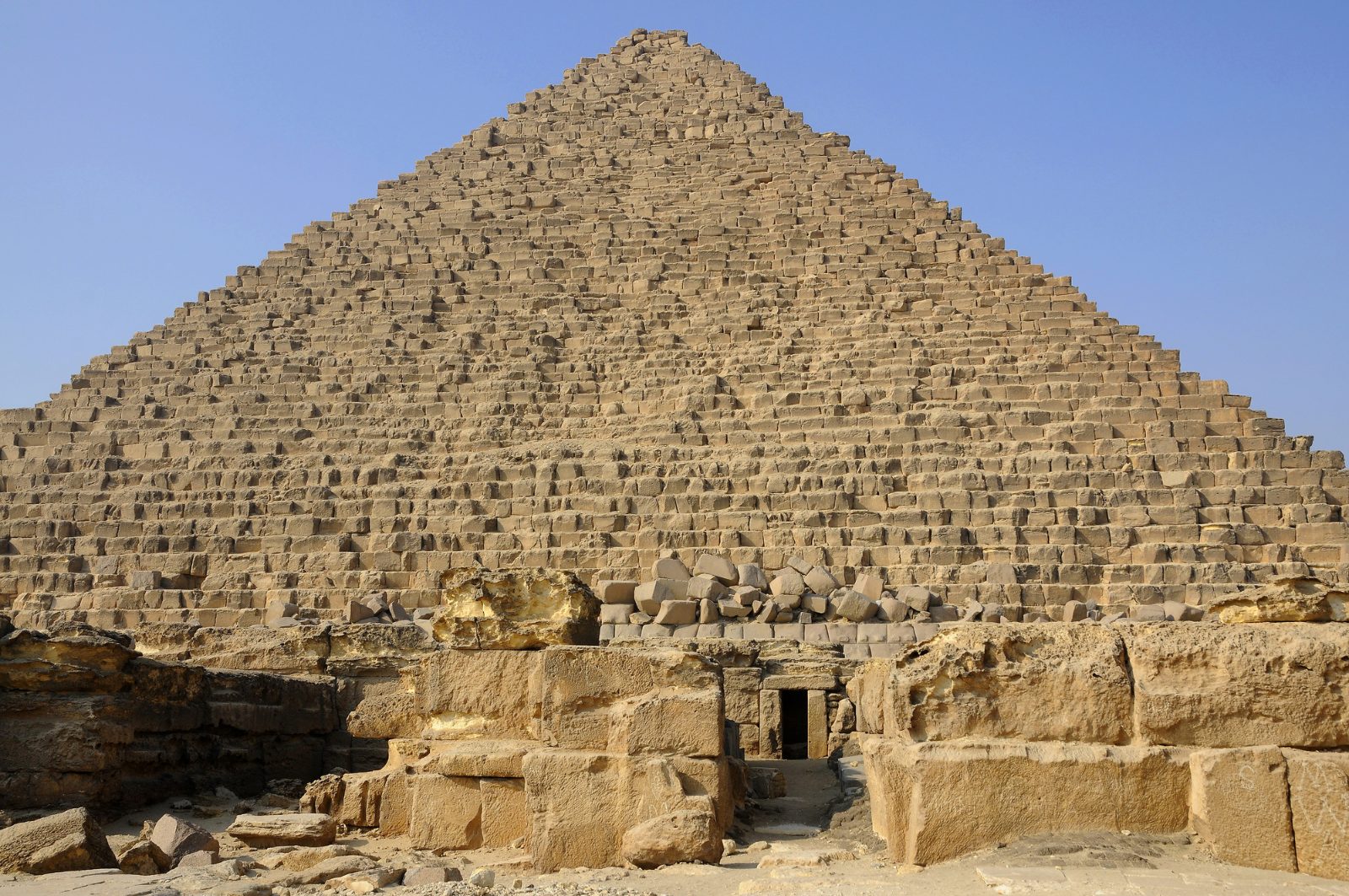
The largest of the three pyramids stood as the tallest man-made structure on Earth for roughly 3,800 years until the completion of Lincoln Cathedral. Built from an estimated 2.3 million limestone blocks, it originally rose about 146.6 meters before losing its outer casing stones.
The second-largest pyramid at Giza retains patches of its original polished limestone casing near its summit, visible from the ground on clear days. Its base covers slightly less area than Khufu's pyramid but it sits on higher bedrock, making it appear nearly as tall.
The smallest of the three main pyramids was originally clad partly in red granite at its base, remnants of which are still visible today. Its interior burial chamber was found looted in antiquity, leaving few original artifacts inside.
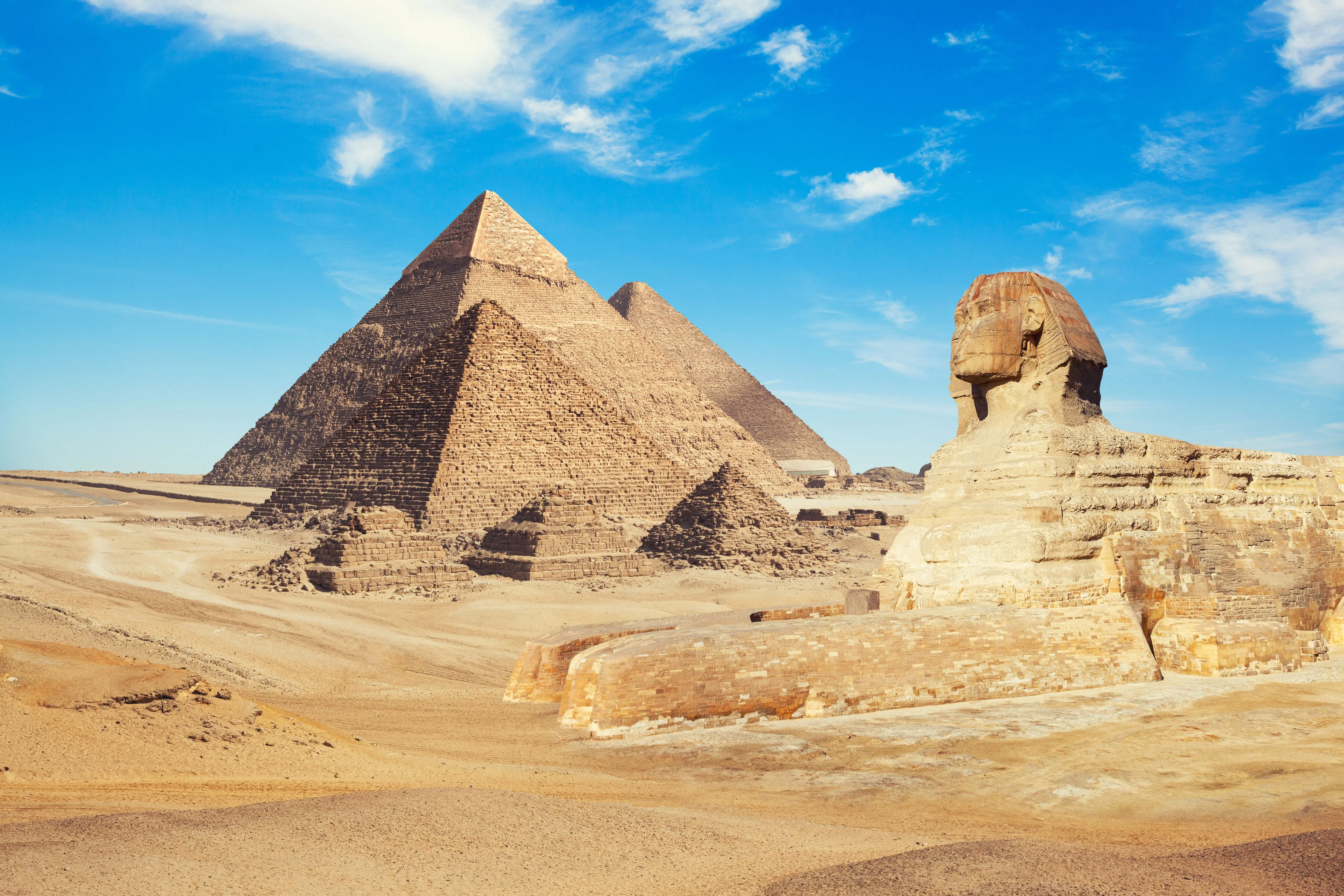
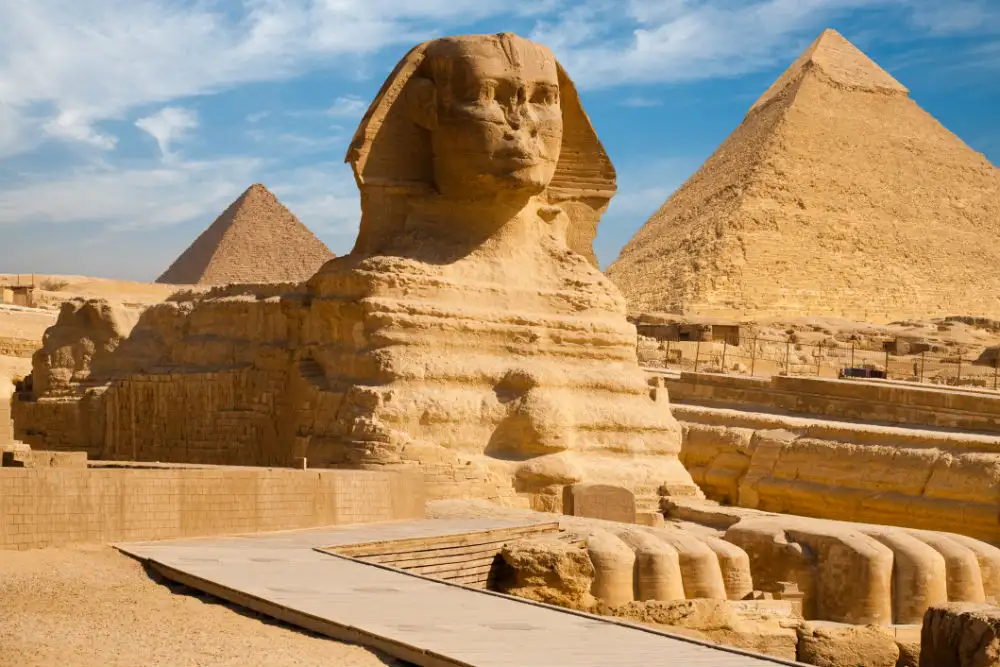
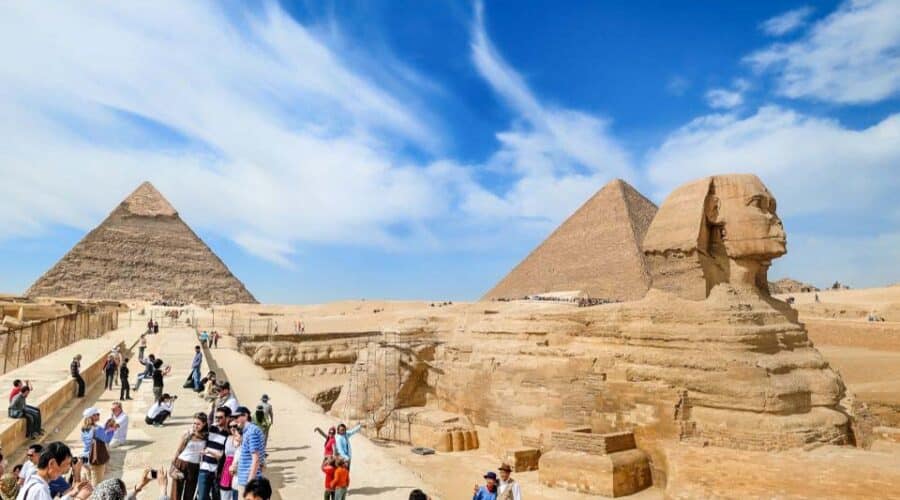
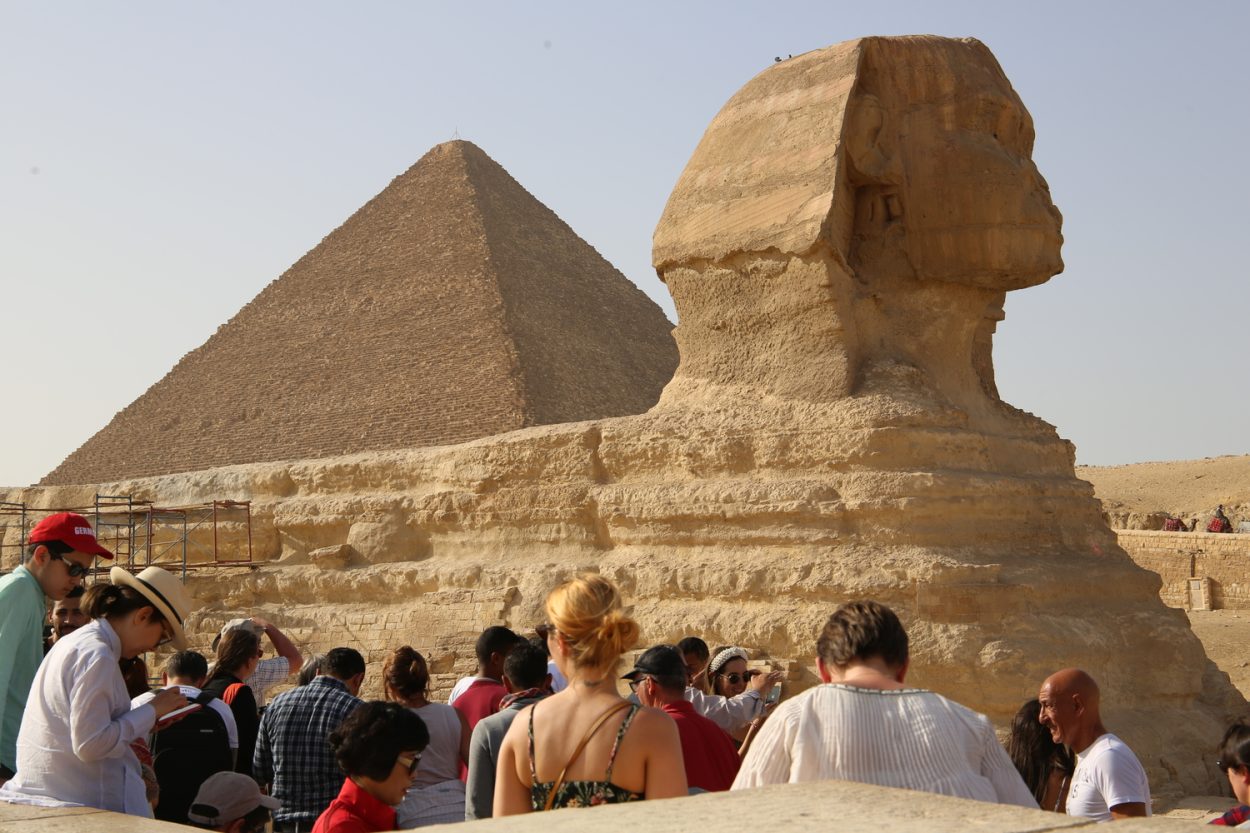
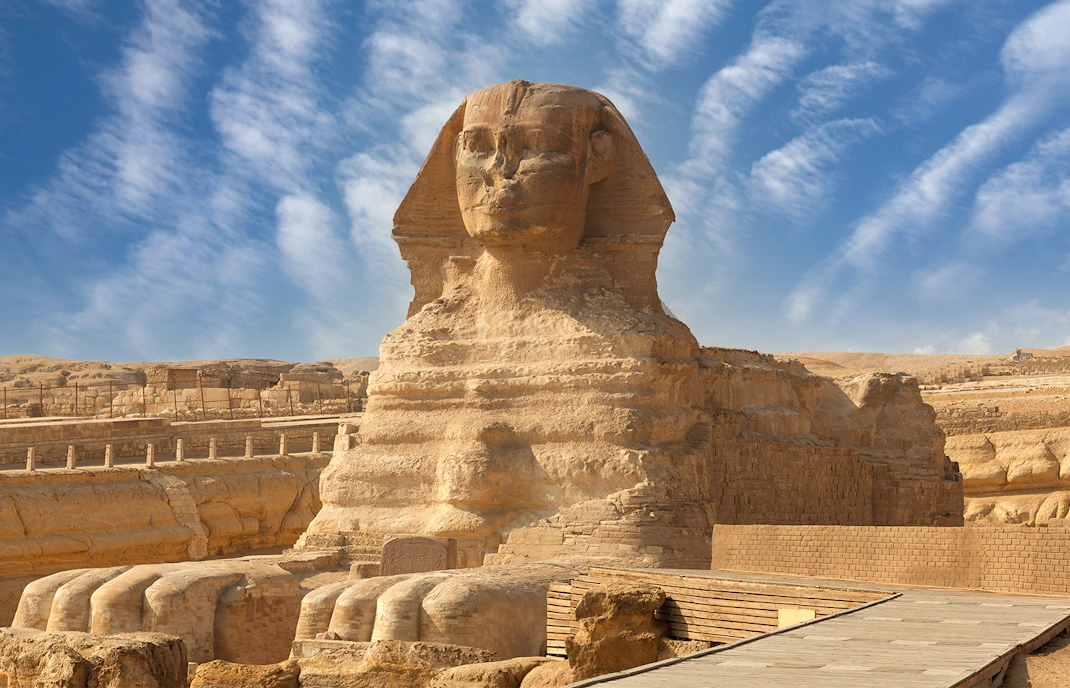
Carved from a single limestone outcrop, this statue combines a lion's body with a pharaoh's head and measures about 73 meters long and 20 meters high. Its nose has been missing for centuries, with erosion and deliberate damage both cited as possible causes.
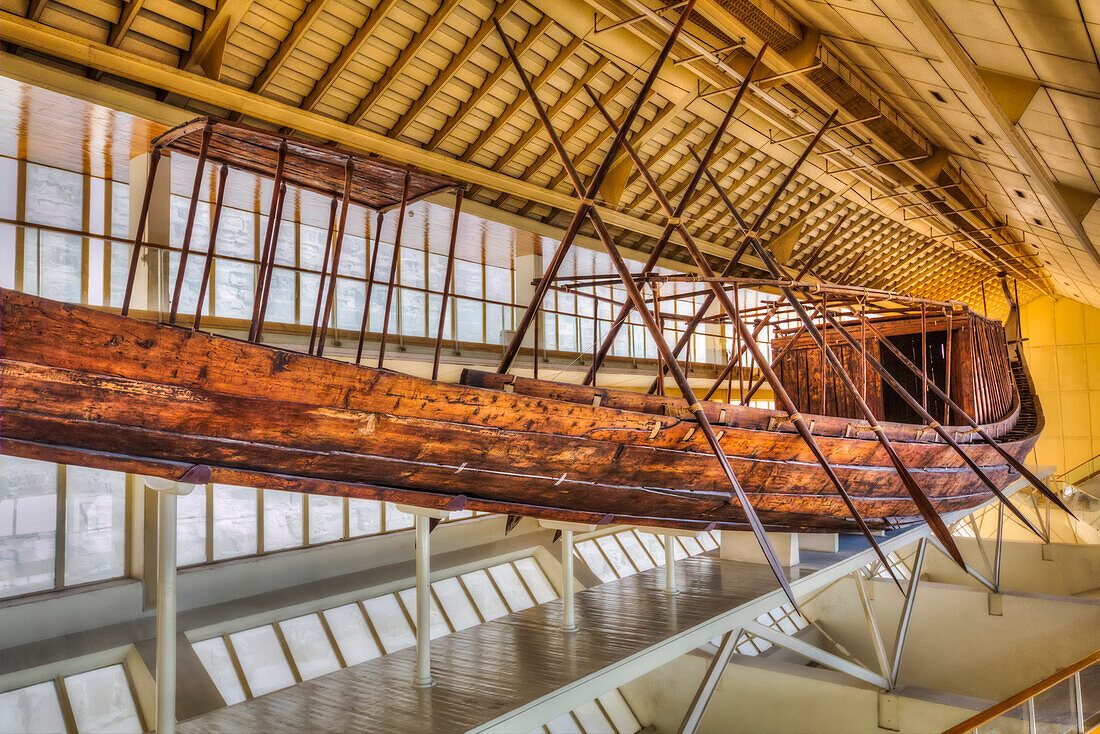
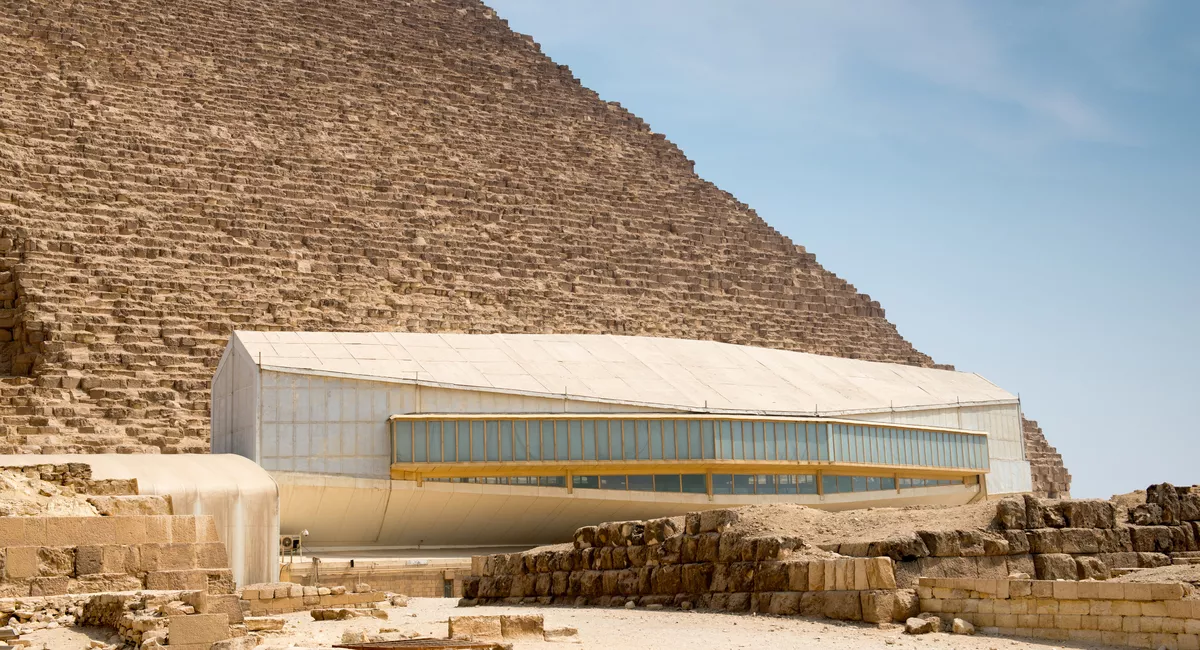
This museum displays a reconstructed cedar wood funerary boat discovered dismantled in a sealed pit beside the Great Pyramid in 1954. The vessel was reassembled from over 1,200 individual wood pieces without a single nail.
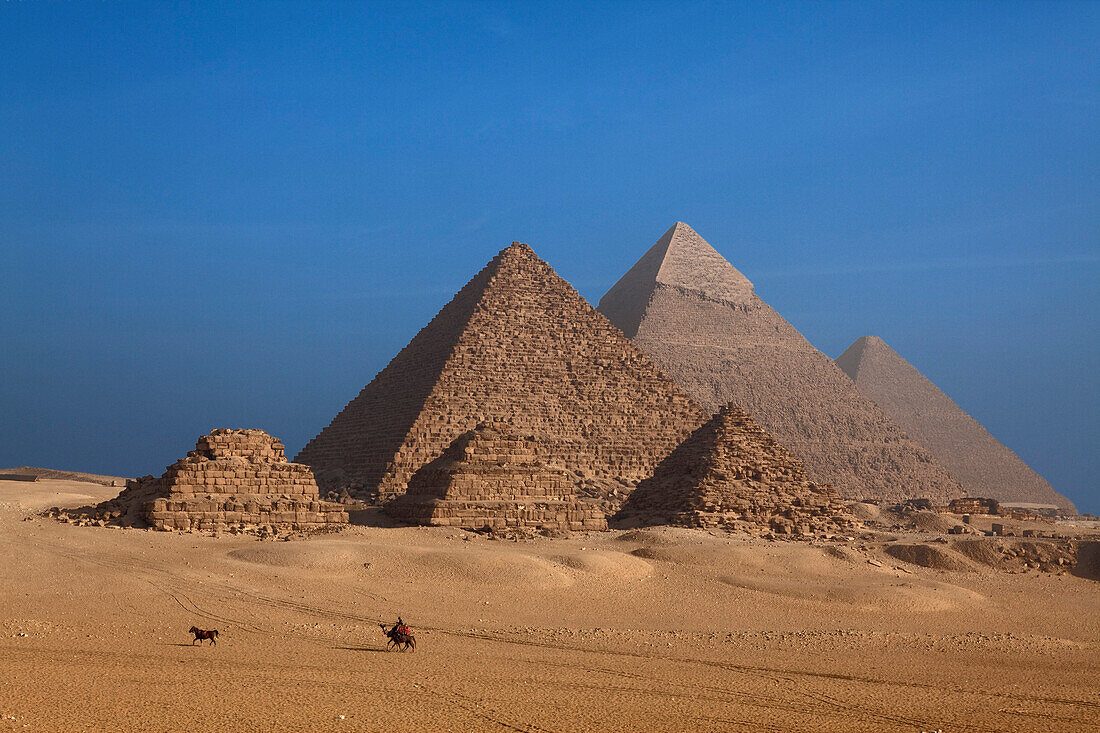
A trio of smaller subsidiary pyramids near Khufu's monument are believed to have been built for his queens and close royal family members. Their modest scale contrasts sharply with the main pyramid, offering a sense of the site's full royal burial complex.
You lift off from Hurghada before sunrise, the Red Sea receding beneath the wing as the aircraft climbs over the desert escarpment. Sixty minutes later you descend into Cairo, where an air-conditioned coach waits on the tarmac.
The drive west takes thirty minutes, threading through Giza's urban fringe until the pyramids appear above the roofline, their limestone faces catching the morning sun.
You enter the plateau through the main gate at Al Haram Street, passing the ticket checkpoint where your guide secures group entry. The path leads directly to the Great Pyramid's north face, where you can walk the perimeter or climb the access ramp to the original entrance. Your Egyptologist points out the casing stones still visible near the summit and explains the internal chamber arrangement without requiring you to enter. You continue south to the Sphinx enclosure, descending stone steps to the viewing platform where the statue's leonine body stretches across the bedrock.
By midday you return to the coach for the transfer to Tahrir Square. The Egyptian Museum's ground floor is a columned hall filled with sarcophagi and statuary; you move through the Old Kingdom galleries before ascending to the Tutankhamun collection on the second floor. Your guide allocates ninety minutes inside, sufficient for the golden mask, the canopic shrine, and a selection of jewelry cases. You depart the museum by 15:00, reaching the airport in time for the late-afternoon flight back to Hurghada. You land as the sun sets over the resort coast.
Tutti i dettagli della tua prossima avventura in un unico posto
Commercial aviation transformed access to the Giza Plateau in the 1990s when coastal resort operators began chartering domestic flights from Red Sea hubs, compressing a twelve-hour overland round trip into ninety minutes of airtime.
The flight path crosses the Eastern Desert before descending over the Nile Delta, bringing passengers within thirty kilometers of structures that have anchored the western bank of the Nile for forty-six centuries. The Great Pyramid of Khufu, built around 2560 BCE, consumed an estimated 2.3 million limestone blocks and rose to 146.5 meters, holding the record as the world's tallest human-made structure for 3,800 years until Lincoln Cathedral's spire overtook it in 1311 CE.
Today the Giza Necropolis functions as both archaeological reserve and working monument. The Sphinx, carved from a single limestone outcrop during Khafre's reign, measures seventy-three meters in length and guards the valley temple complex where priests performed mummification rituals. The site opens daily at 08:00, and the plateau receives its heaviest visitation between 10:00 and 14:00 when convoy tours from coastal cities converge with independent visitors. Flight-based day trip from Hurghada to pyramids by plane itineraries bypass this congestion by scheduling early departures from Hurghada International Airport, typically landing at Cairo by 09:30 and reaching the plateau entrance before the tour bus peak. The standard 500 EGP admission grants access to the outer complex; interior pyramid chambers and the Solar Boat Museum require separate tickets purchased on-site.
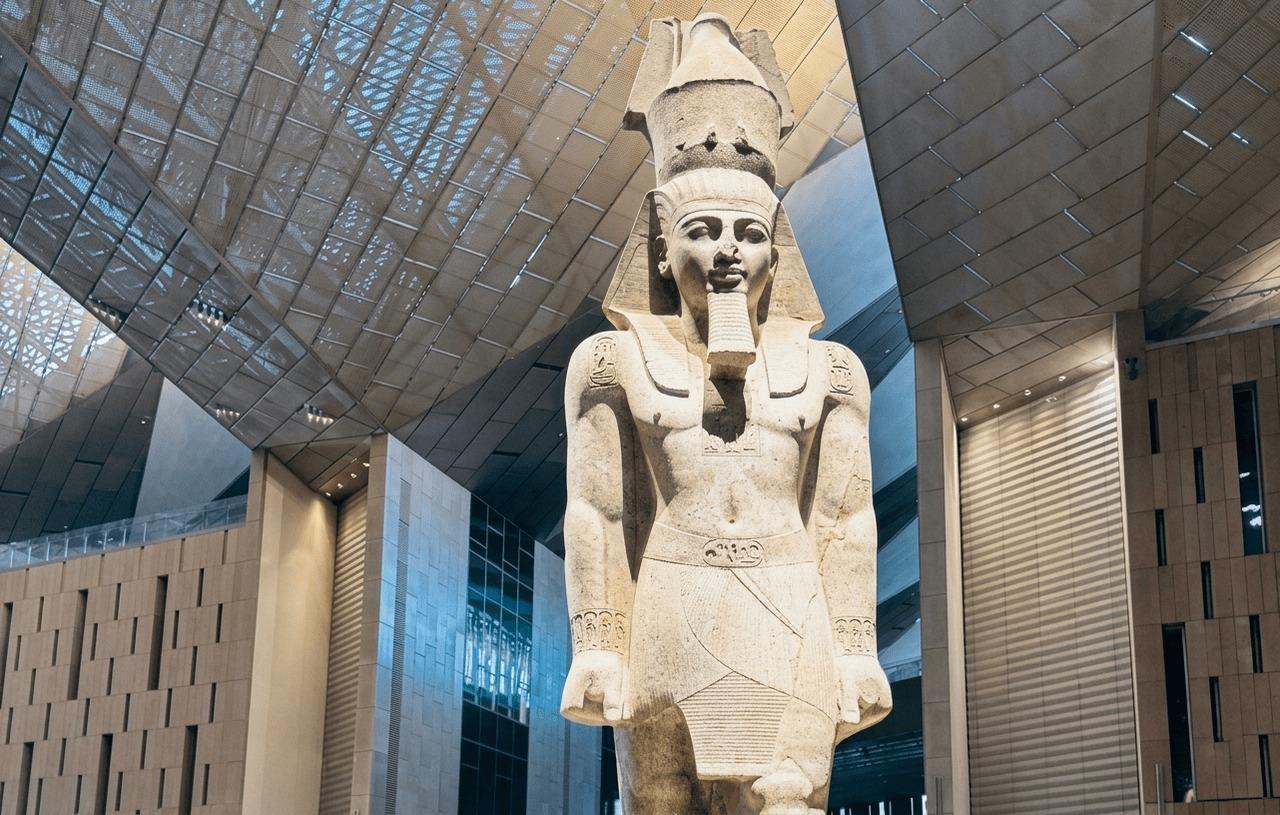
The Egyptian Museum in Tahrir Square, included in most flight packages, houses 120,000 artifacts spanning five millennia, with the Tutankhamun galleries occupying the second floor's north wing. The museum's layout follows a chronological circuit: ground-floor halls trace Old Kingdom statuary through Greco-Roman busts, while upper galleries concentrate on funerary goods, jewelry, and papyrus. Climate control remains inconsistent in older wings, a legacy of the building's 1902 inauguration under French architect Marcel Dourgnon. Egyptologists accompanying day trip from Hurghada to pyramids by plane tours navigate the collection's density, prioritizing the Narmer Palette, Menkaure Triad, and the royal mummy room when time constraints allow. The museum operates until 17:00, aligning with return flight schedules that depart Cairo by late afternoon.
Flight-inclusive tours consolidate logistics that independent travelers manage piecemeal: domestic air tickets, Cairo ground transfers, licensed guides, and site admissions. The aerial approach offers a geographic advantage, situating visitors inside the capital's cultural corridor by mid-morning rather than midday, maximizing the cooler hours when the plateau's exposed limestone reflects less solar radiation and the Sphinx's eastern face catches oblique light.

The flight path crosses the Eastern Desert before descending over the Nile Delta, bringing passengers within thirty kilometers of structures that have anchored the western bank of the Nile for forty-six centuries.
Giza sits in open desert, so lightweight, breathable clothing in light colors works best, with shoulders and knees covered out of respect for local custom when entering mosque areas en route. Closed, sturdy shoes are recommended for walking on sand and loose stone around the pyramid bases, and a hat plus sunglasses help against the strong midday glare.
All visitors pass through a metal detector and bag scan at the Giza plateau entrance gate, similar to airport-style screening. Backpacks and daypacks are permitted but may be opened for a quick visual check, and security staff can deny entry to oversized bags or anything resembling professional camera rigs without prior clearance.
Personal photography and smartphone video are free throughout the plateau, including at the Sphinx viewing terrace, but tripods and drones require a separate permit arranged in advance through the Ministry of Tourism and Antiquities. Flash photography is prohibited inside the pyramid interior chambers to protect the ancient stonework.
Children of all ages are welcome on the plateau, and most flight-inclusive day trips from Hurghada to the pyramids by plane include a private vehicle rather than a shared coach, which suits families with young kids. Strollers struggle on the sandy terrain, so a child carrier is more practical for the walk between the pyramids and the Sphinx.
The Giza plateau has uneven sand, gravel, and stone terrain that makes wheelchair and stroller movement difficult without assistance, and the pyramid interiors involve steep, narrow passages unsuitable for limited mobility. Golf cart transfers between the main viewing points can be arranged on request, and accessible restrooms are available near the main visitor center.
Bottled water and small snacks are permitted on the plateau, but eating is discouraged directly beside the monuments and there are no shaded picnic areas near the pyramids themselves. Vendors sell drinks and light refreshments near the entrance and the Sphinx area, and coolers or large food containers are not allowed through the security checkpoint.
Tour buses arrive mid-morning
Popular with school groups
Busier after midday prayers
Heaviest weekend crowds
Hours today
08:00–17:00 daily
Opening hours
08:00 – 17:00
Getting there
City-center access via metro and bus
Accessibility
Most experiences are wheelchair-friendly — check individual tours
What to bring
Comfortable shoes, water, phone for mobile voucher
Car · Flight ~1h plus transfers · Included in flight-inclusive package pricing
Private transfer picks up from Hurghada hotels, connects to a domestic flight to Cairo, then drives roughly 30-45 minutes from Cairo International Airport to the Giza plateau.
Flight-inclusive day trips from Hurghada to the pyramids by plane can typically be cancelled or rescheduled free of charge up to 48-72 hours before departure, depending on the operator; the 500 EGP Giza plateau entrance fee is only charged once the tour reaches the site and is included in most package prices. Refunds after the cutoff window are generally not issued because domestic flight seats and guide bookings are confirmed in advance.
Recommended time
3-4 hours on the plateau
With flight time from Hurghada eating into a 15-20 hour day, most travelers land at the pyramids mid-morning and get 3-4 hours on site before heading back for the return flight, enough for the three pyramids, the Sphinx enclosure and a camel or photo stop without rushing. A day trip from Hurghada to pyramids by plane compresses the schedule, so guides typically trim time at the panoramic viewpoint rather than skip the Sphinx. Add 30-45 minutes if the itinerary includes the Solar Boat Museum or a camel ride add-on, and expect ticket queues to stretch longer once tour buses arrive around mid-morning. Since flights fix your arrival and departure windows, there is little flexibility to shift timing once the day trip from Hurghada to pyramids by plane tour is booked.
Crowd levels through the day
Meteo · affollamento · prezzo medio — i punti passano dal verde all'arancione al rosso al crescere di ogni indicatore.
Daytime temperatures ease to the high 20s-30s°C, making September through November a comfortable stretch for a day trip from Hurghada to the pyramids by plane with lighter crowds than winter peak season.
A day trip from Hurghada to the pyramids by plane cuts travel time to about an hour each way versus a 5-6 hour road drive, leaving more time at the plateau.
Hurghada, Red Sea Governorate, Egypt
Standard pickup point for flight-inclusive day trip departures
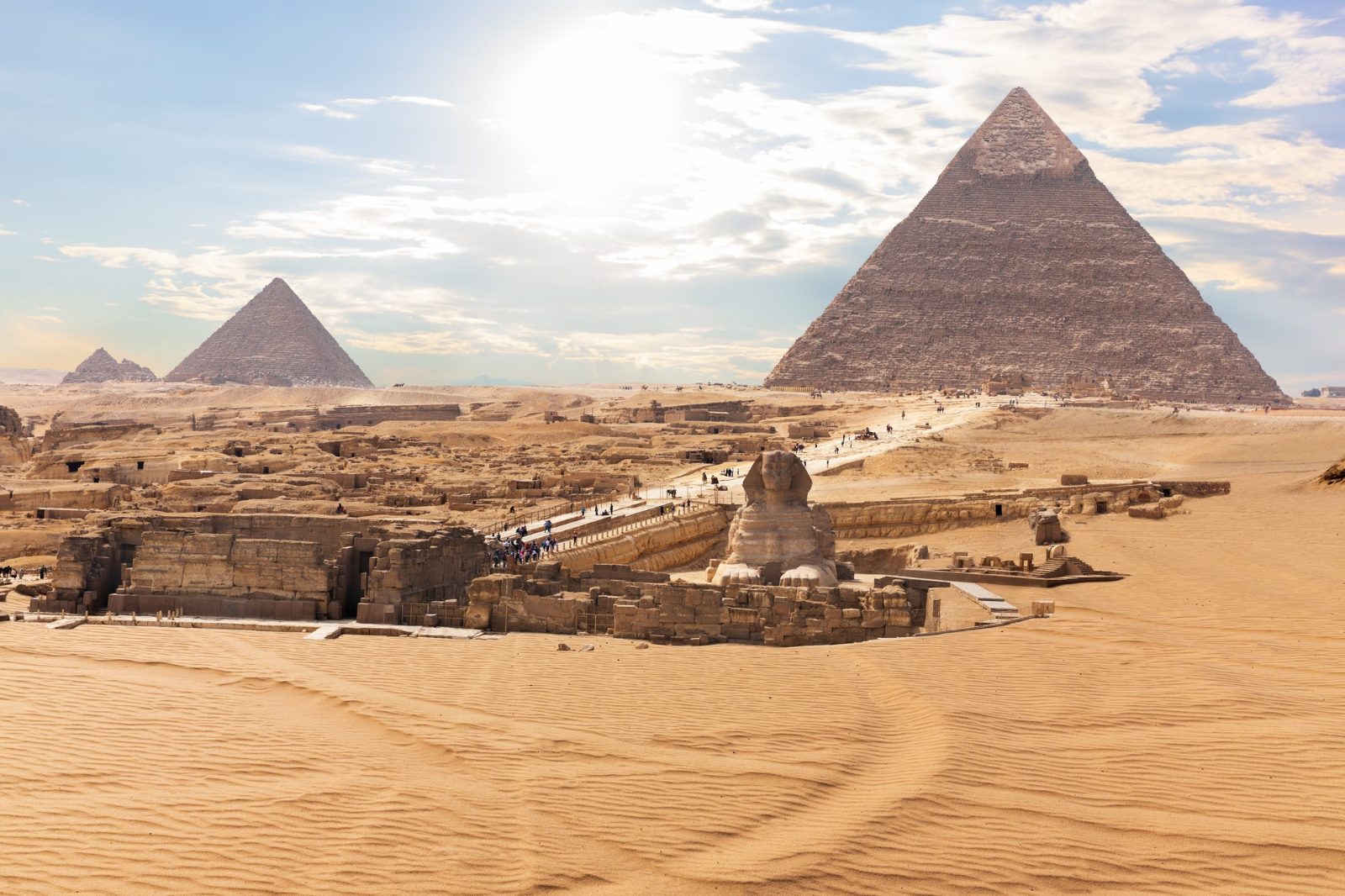
Get directionsThe Giza Pyramid Complex stands as the sole survivor of the Seven Wonders of the Ancient World, built during Egypt's Fourth Dynasty between 2580 and 2510 BCE. Pharaoh Khufu commissioned the Great Pyramid around 2560 BCE, employing an estimated 100,000 workers who quarried 2.3 million limestone blocks averaging 2.5 tons each. His son Khafre built the second pyramid circa 2532 BCE, preserving its original Tura limestone casing at the apex, while grandson Menkaure completed the smallest of the trio around 2510 BCE. The Great Sphinx, carved from a single limestone outcrop during Khafre's reign, measures 73 meters long and guards the necropolis with a pharaoh's head atop a lion's body. Medieval Arab historians documented early exploration attempts, though systematic archaeology began only in the 19th century when Giovanni Battista Caviglia cleared sand from the Sphinx in 1817. French engineer Jean-Pierre Houdin proposed in 2007 that an internal ramp system enabled the Great Pyramid's construction, challenging century-old external ramp theories. Modern excavations by Mark Lehner uncovered workers' villages near the plateau in the 1980s, proving that skilled laborers—not slaves—built these monuments. Those booking day trip from hurghada to pyramids by plane tours arrive at a site that has drawn pilgrims, conquerors, and scholars for over four millennia. The complex gained UNESCO World Heritage status in 1979, recognizing its universal value as humanity's earliest monumental stone architecture. Recent conservation efforts include laser scanning the Great Pyramid's interior chambers in 2015 and installing drainage systems to combat groundwater damage. Today's plateau receives over four million annual visitors, with flight-based excursions from Red Sea resorts offering efficient access to these Old Kingdom masterworks. The enduring precision of the pyramids—the Great Pyramid's base deviates only 58 millimeters from perfect squareness—continues to inspire engineering studies and cement Giza's status as archaeology's most scrutinized site.
Pharaoh Khufu orders construction of the Great Pyramid, requiring 2.3 million limestone blocks quarried and transported to the Giza plateau.
Khafre builds the second pyramid and commissions the Great Sphinx, carved from a single limestone outcrop to guard the royal necropolis.
Menkaure completes the third and smallest pyramid, closing the Fourth Dynasty's monumental building program at Giza.
Italian explorer Giovanni Battista Caviglia conducts the first systematic excavation, clearing sand from the Sphinx and documenting the complex.
UNESCO designates the Giza Pyramid Complex a World Heritage Site, recognizing its significance as the oldest intact Ancient Wonder.
Archaeologist Mark Lehner uncovers workers' villages near the plateau, proving skilled laborers rather than slaves built the pyramids.
Engineer Jean-Pierre Houdin proposes an internal ramp theory for the Great Pyramid's construction, challenging traditional external ramp models.
Thermal scanning and 3D laser mapping reveal previously unknown voids inside the Great Pyramid, advancing structural understanding of the monument.
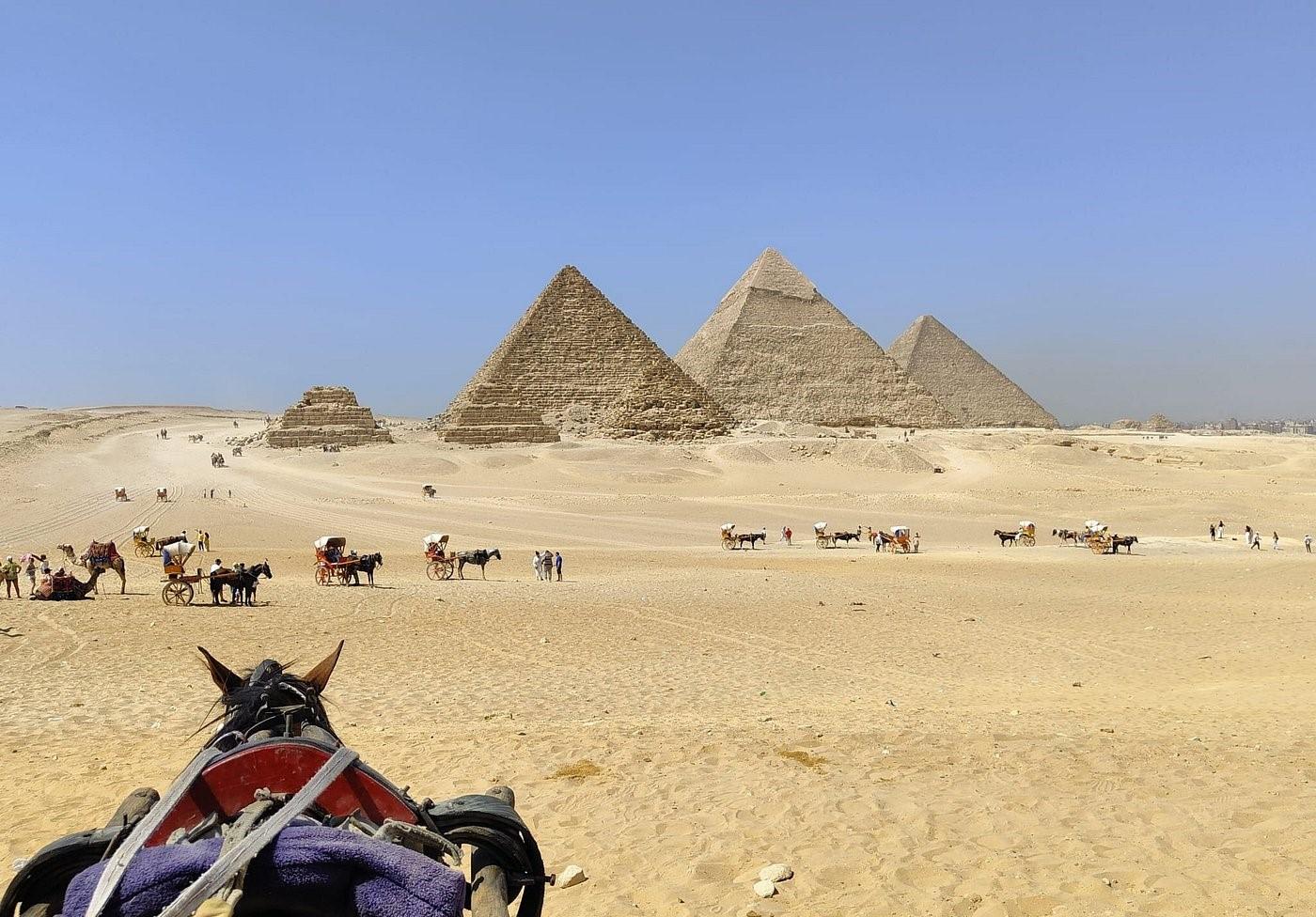
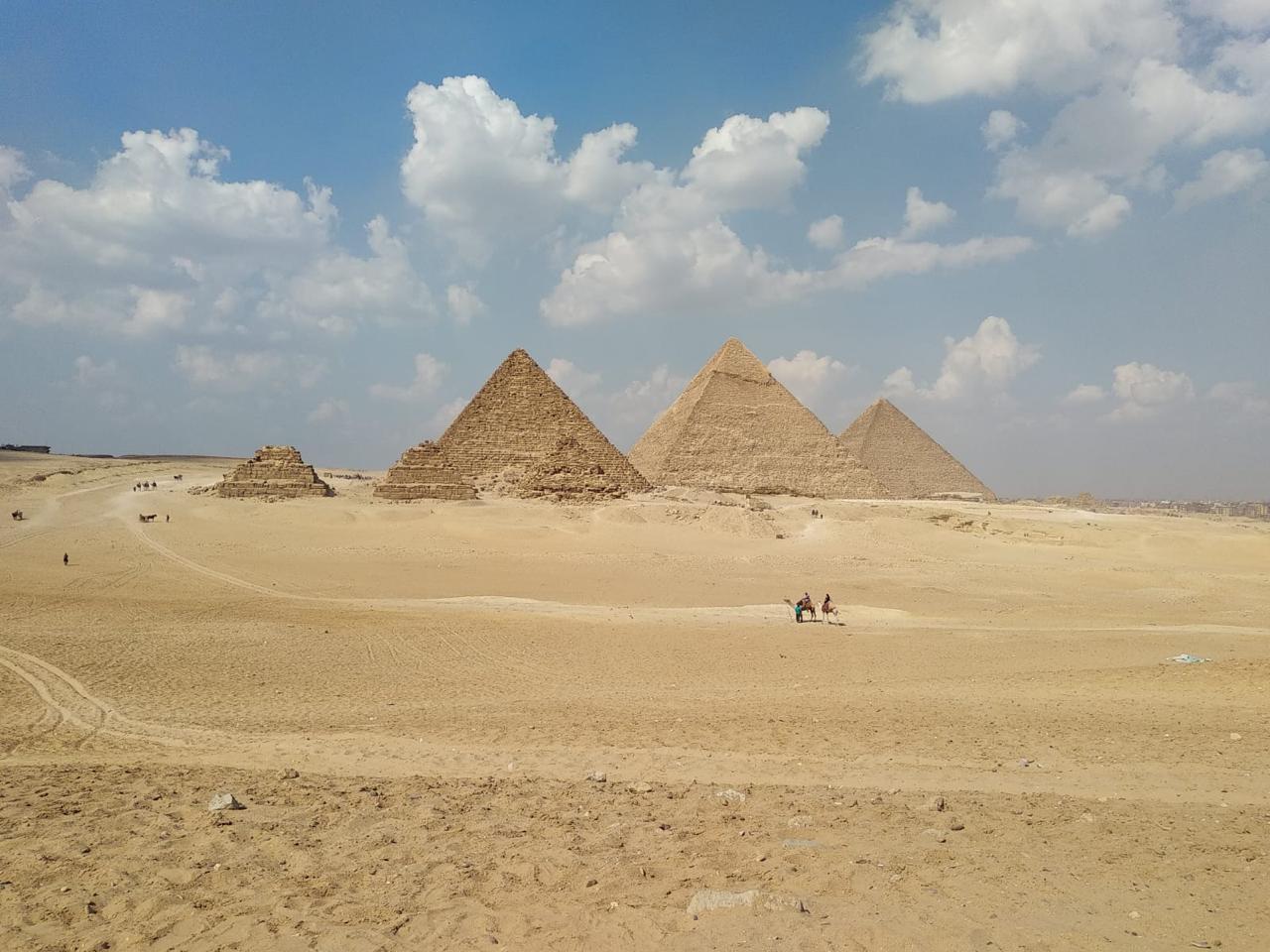
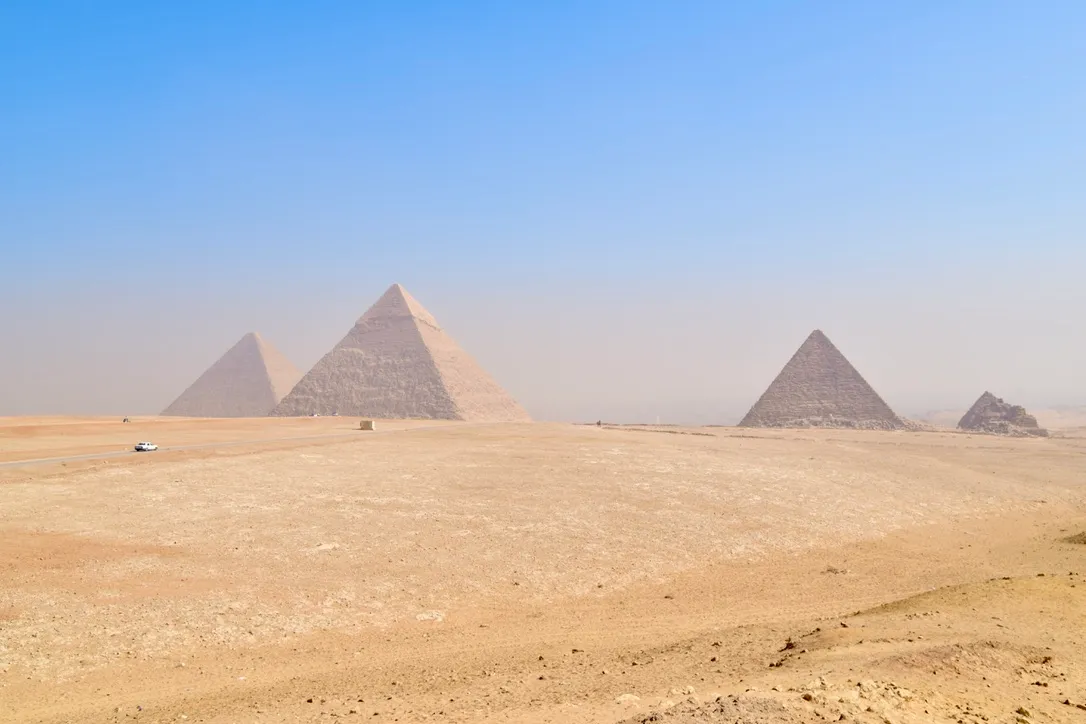
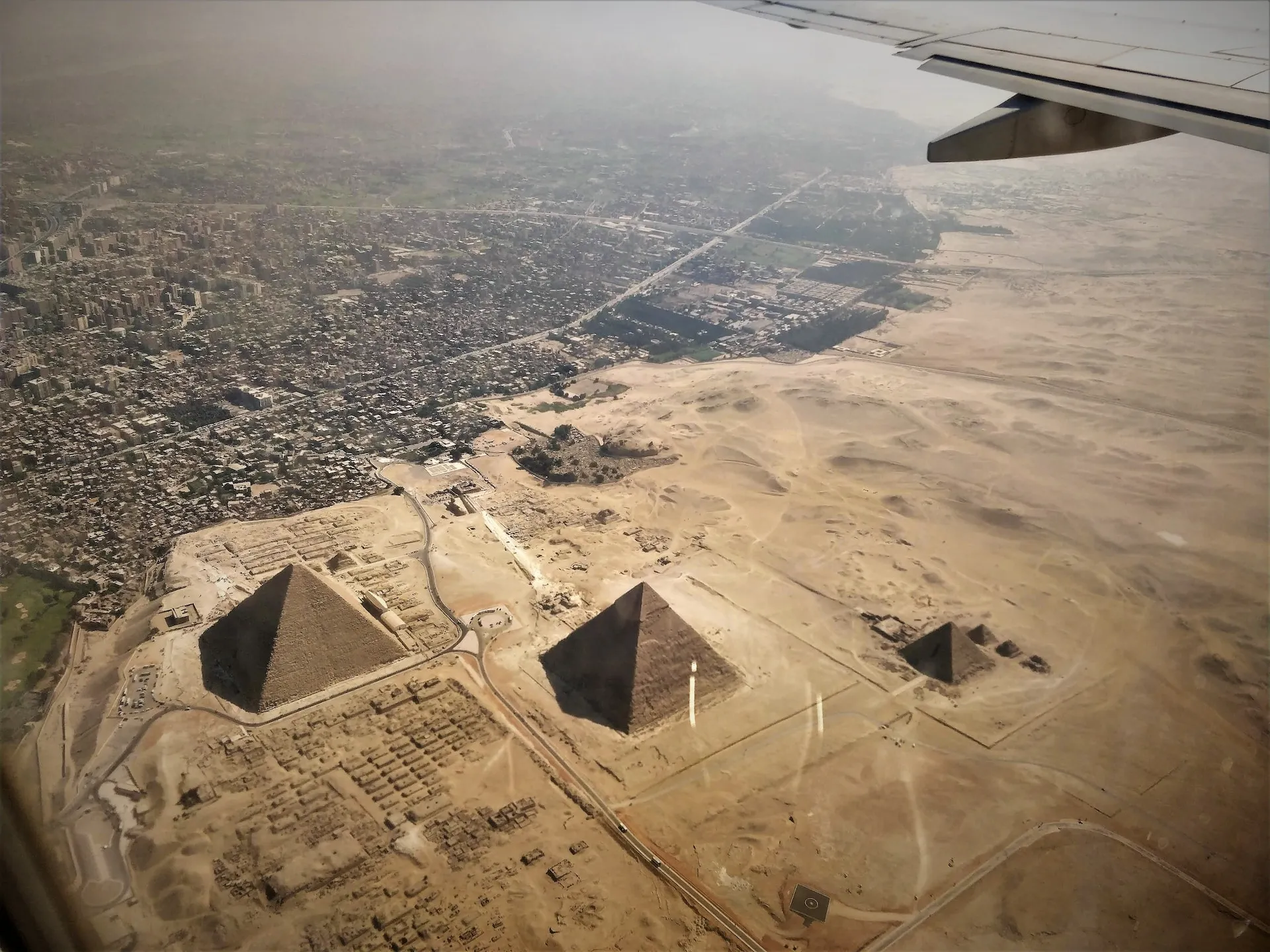
The classic wide overlook south of the plateau capturing all three pyramids in one frame, reached by a short taxi or camel ride from the main complex road. Stand near the low wall for the clearest unobstructed line across the desert ridge.
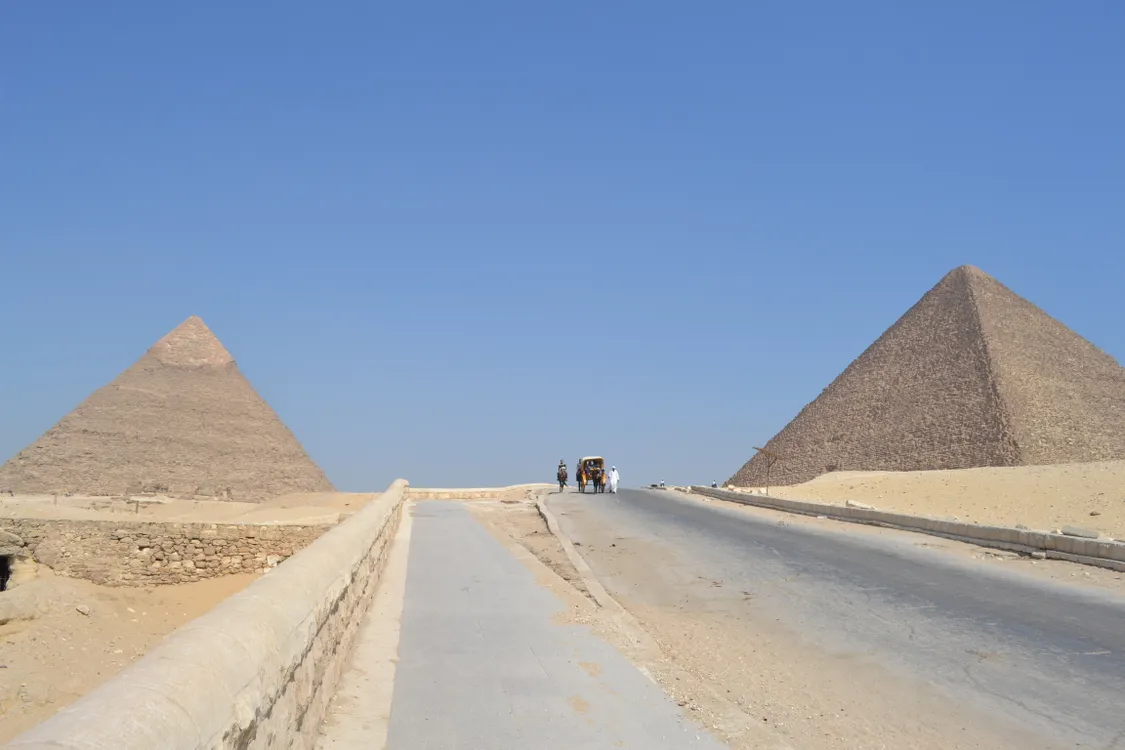
The straight desert road running past the plateau gives a low-angle shot with all three pyramids stacked in sequence, a favorite for anyone squeezing a day trip from Hurghada to pyramids by plane into a few hours. Shoot from the roadside shoulder, keeping clear of passing tour vehicles.
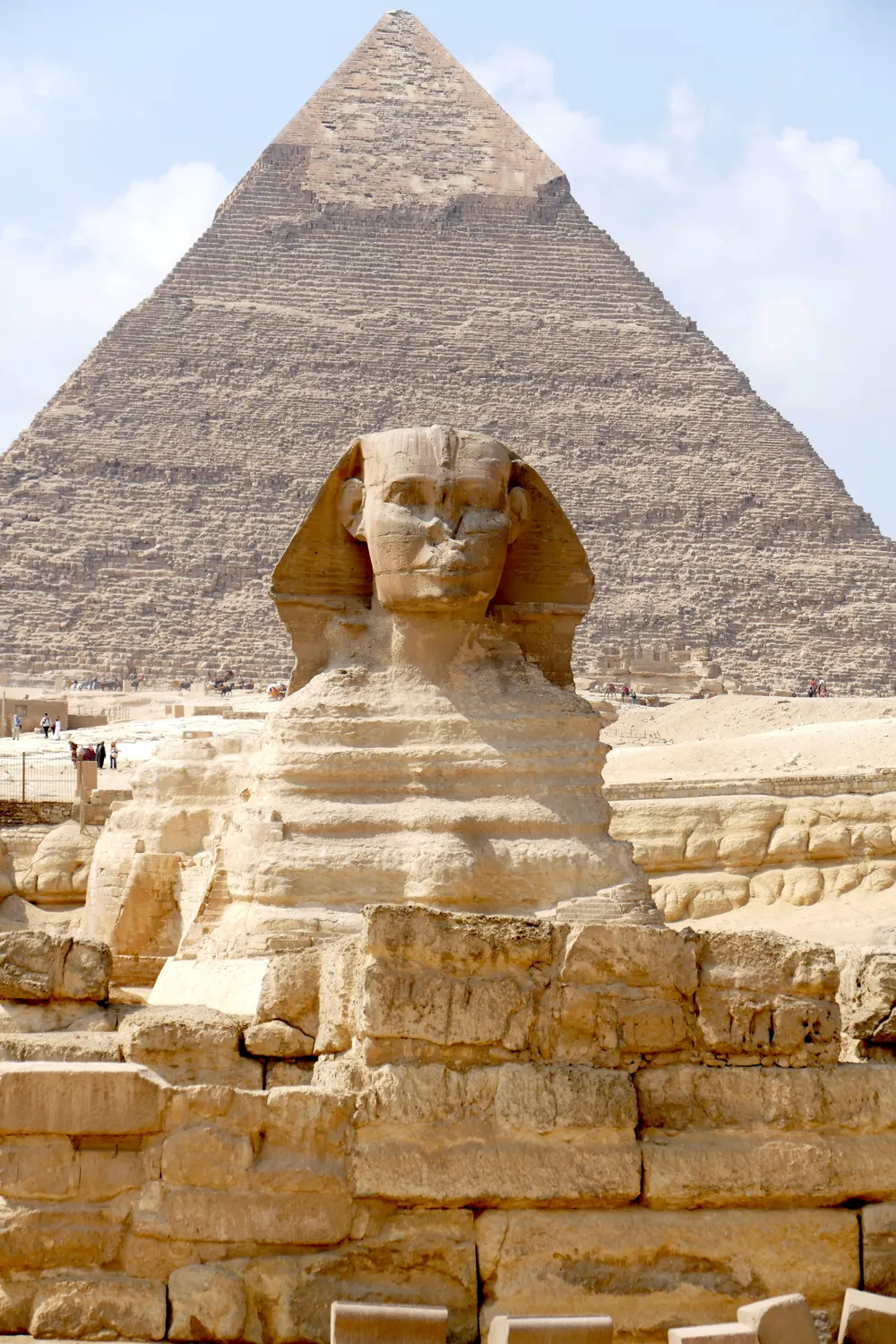
Positioned directly in front of the Great Sphinx enclosure, this angle lines up the Sphinx's profile with the Pyramid of Khafre rising behind it. Best shot from the viewing terrace just past the ticket barrier, not from inside the roped enclosure.
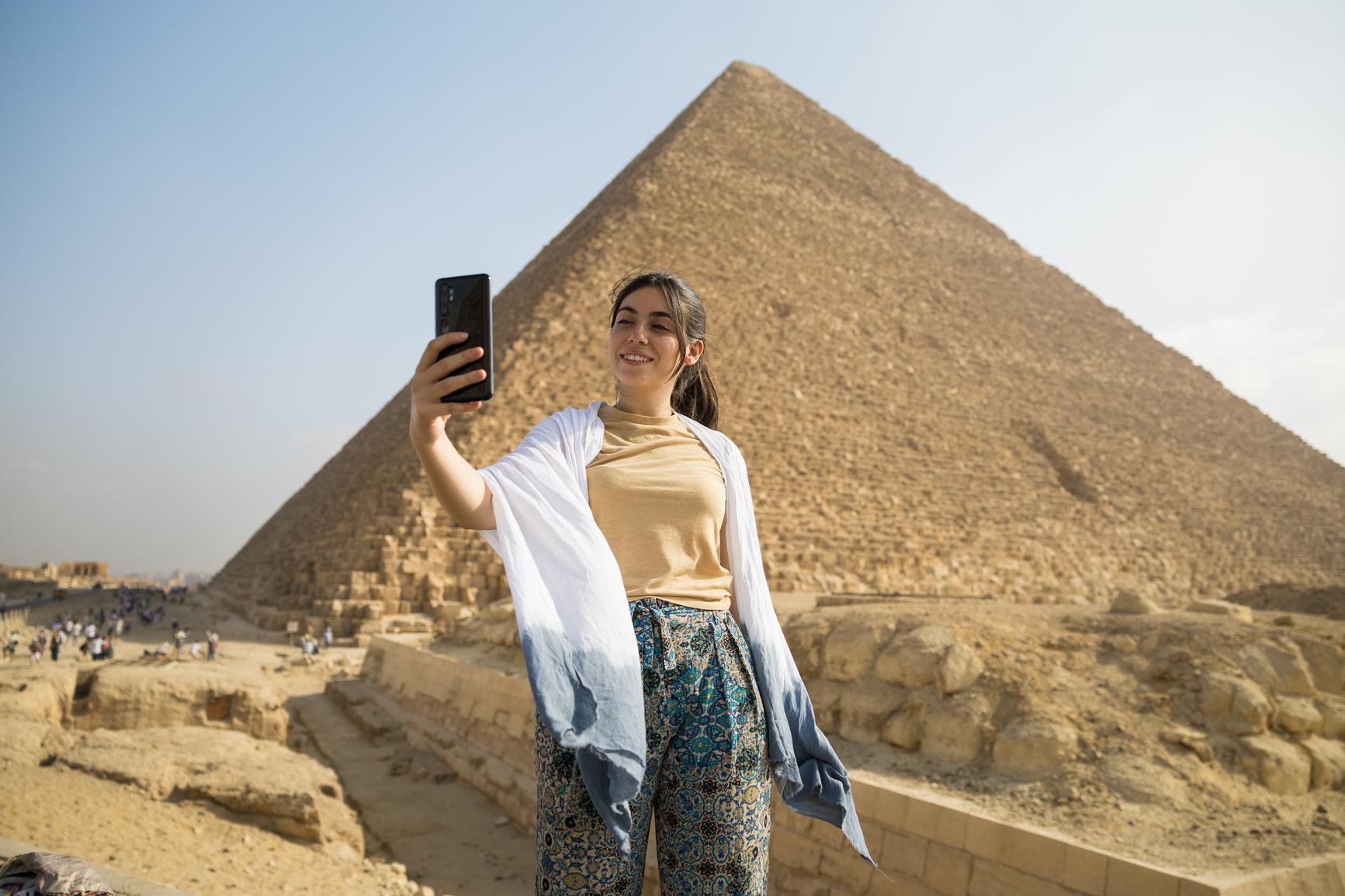
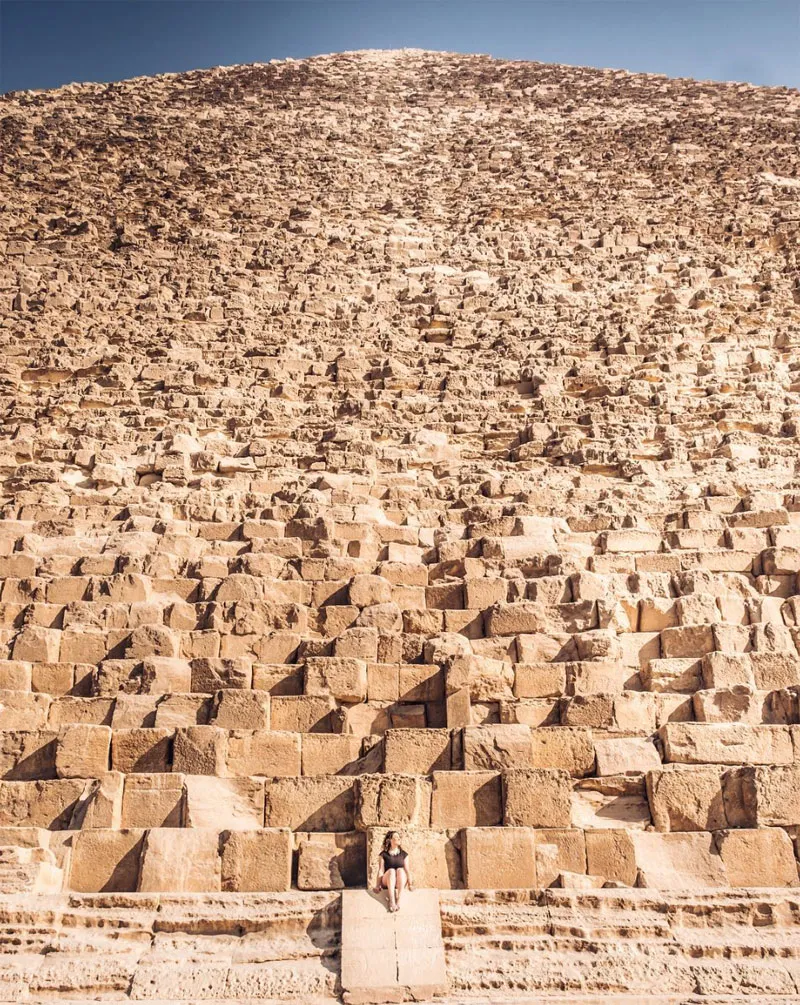
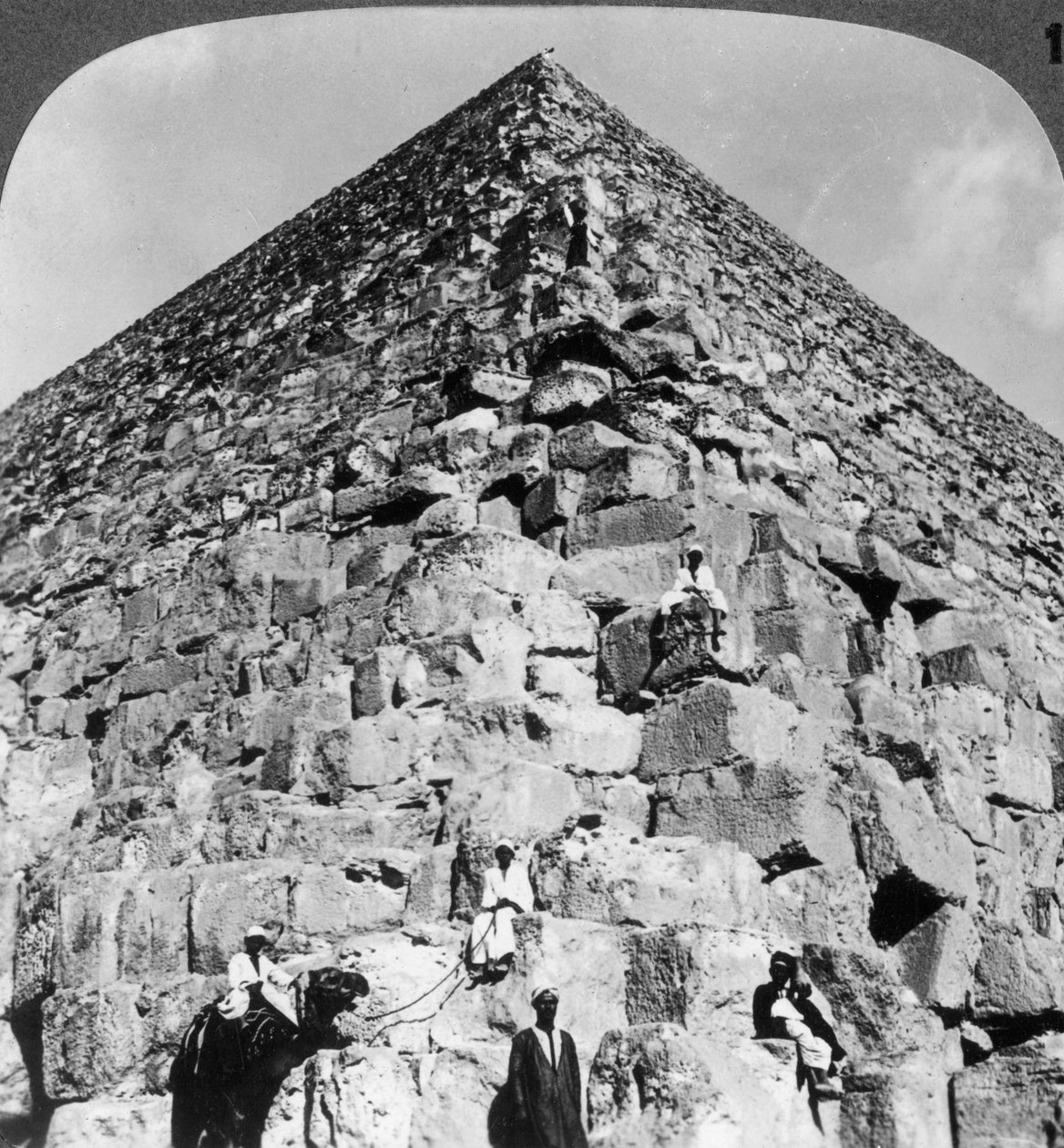
Standing at the southeast corner of the Great Pyramid of Khufu gives a dramatic upward angle showing the limestone blocks receding toward the apex. Space here is open but fills quickly once buses unload.
A raised viewpoint near the former Solar Boat Museum site offers a clean side-on view of Khufu's pyramid against the sky, away from the main crowd flow. Useful for a quick, uncluttered frame during a short plateau visit.
A day trip from Hurghada to Pyramids by plane means kids are up before dawn and back after dark, so this Giza Pyramid Complex outing rewards families who plan the flight day around rest, not just the ruins. It works best for children who can nap on a short flight and handle a few hours of desert walking without a stroller.
Children around 6 and up cope best with the early flight, transfer and open plateau walking; toddlers and infants tend to struggle more with the 15-20 hour span than with the pyramids themselves.
Sand and loose stone across the plateau make wheeled strollers impractical, so plan on carrying younger children or using a compact carrier for the walking sections.
Let kids sleep on the early outbound flight and on the return leg, since these are the only real windows for rest during a single-day Hurghada-to-Giza pyramids tour.
Break the plateau visit into short walking bursts with shade and water stops rather than one long trek, keeping in mind the whole family day already spans two flights and ground transfers.
Restrooms are available near the main entrance and visitor areas, but options thin out further onto the plateau, so use facilities early and carry wipes and a change of clothes for younger children.
Rain is rare here, but sandy wind gusts can affect visibility, so carry sunglasses and a light scarf for kids and treat any weather disruption as a cue to shorten the walking portion, not skip it.
Most travelers on a day trip from Hurghada to Pyramids by plane grab lunch in Nazlet El-Semman, the village strip just below the plateau wall, since there is little to eat inside the gates themselves. Rooftop and terrace spots there face the monuments directly, which suits a quick stop between the Sphinx and camel-ride portions of a typical Giza landmarks tour.
Known for its terrace overlooking the Sphinx enclosure; good for a tea or light lunch stop, gets busy around midday tour bus arrivals.
A branch with a rare direct pyramid backdrop from its upper floor; useful for a fast, familiar option if the group is short on time.
Shaded outdoor seating close to the entrance, serves Egyptian staples like koshari and grilled kebab; suits a relaxed sit-down before or after entry.
Set on a rooftop with unobstructed views of all three pyramids, popular for group lunches booked through skip-the-line Giza Pyramids tours.
Simple menu of local dishes and cold drinks, convenient for a short break right after the Sphinx viewpoint.
Tutto ciò che devi sapere per il tuo viaggio
The Giza Pyramid Complex is open daily from 08:00 to 17:00, and most flight-inclusive tours land in Cairo mid-morning to make full use of these hours.
General admission to the Giza plateau costs 500 EGP per foreign adult, which is typically bundled into the price of a flight-inclusive day trip package.
The plateau has uneven sand and stone terrain that limits wheelchair access, though golf cart transfers between viewing points can be arranged on request.
All visitors pass through a metal detector and bag scan at the entrance gate, similar to airport-style screening.
Yes, personal cameras and smartphones are welcome throughout the site, though tripods and drones require a separate permit and flash is not allowed inside pyramid interiors.
Autumn months from September through November offer comfortable temperatures and lighter crowds compared to the winter peak season for a day trip from Hurghada to pyramids by plane.
Lightweight, breathable clothing with shoulders and knees covered is recommended, along with closed shoes for walking on sand and stone.
Bottled water and light snacks are allowed, but there are no shaded picnic areas directly beside the monuments.
A day trip from Hurghada to pyramids by plane involves a roughly one-hour domestic flight to Cairo followed by a 30-45 minute transfer to the Giza plateau.
Yes, the tour suits families, and private vehicle transfers included in most packages work better for young children than a sandy walk with a stroller.
Most flight-inclusive day trips allow free cancellation or rescheduling up to 48-72 hours before departure, since flight seats and guides are booked in advance.
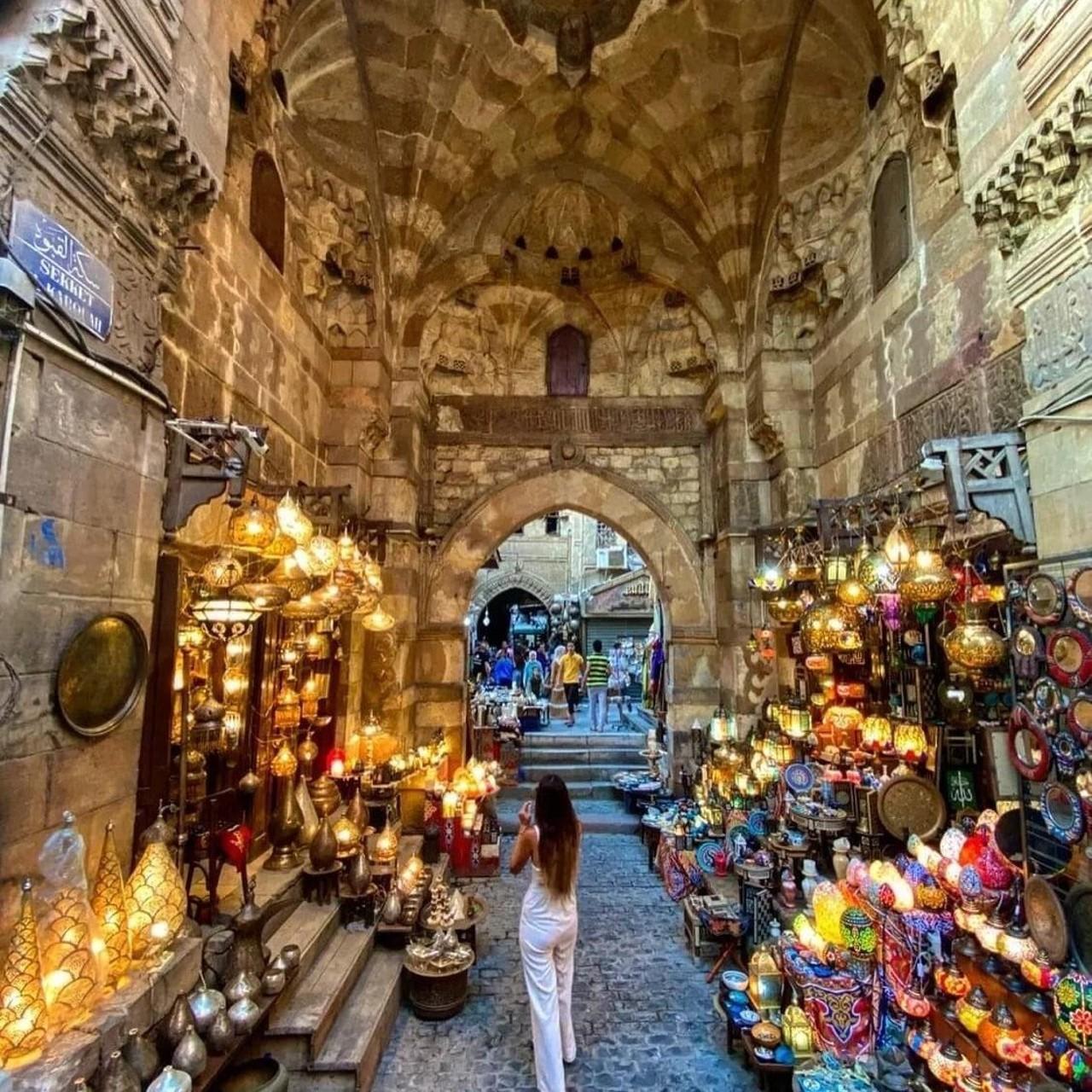
The Great Sphinx, the Solar Boat Museum, and central Cairo's Khan el-Khalili bazaar are common add-ons combined with the Giza pyramids on a single day trip.
Limestone statue with a lion's body and pharaoh's head guarding the pyramid complex.
Wide range of hotel tiers near the Egyptian Museum and Nile-side districts.
Unisciti a migliaia di viaggiatori felici che hanno scoperto questa incredibile esperienza
Prenota la tua esperienza ora